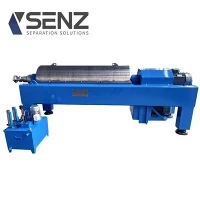

As a supplier of decanter machines, I often get asked about the power consumption of these remarkable pieces of equipment. Understanding the power consumption of a decanter machine is crucial for businesses aiming to optimize their operations, reduce costs, and enhance sustainability. In this blog post, I'll delve into the factors that influence the power consumption of a decanter machine, provide some estimates, and discuss how you can manage and reduce it.
Factors Influencing Power Consumption
The power consumption of a decanter machine is influenced by several key factors, each playing a significant role in determining the overall energy usage.
1. Machine Size and Capacity
Larger decanter machines with higher capacities generally require more power to operate. This is because they need to handle larger volumes of material and generate greater centrifugal forces. For example, a small - scale decanter machine used in a laboratory setting may consume only a few kilowatts, while an industrial - sized decanter machine designed for high - volume processing can consume hundreds of kilowatts.
2. Rotational Speed
The rotational speed of the decanter machine is directly related to its power consumption. Higher rotational speeds generate stronger centrifugal forces, which are essential for effective separation. However, increasing the rotational speed also requires more power. Decanter machines can operate at a wide range of speeds, and the power consumption can vary significantly depending on the specific speed setting.
3. Material Properties
The properties of the material being processed, such as its density, viscosity, and particle size, can have a substantial impact on power consumption. Materials with higher densities or viscosities require more energy to separate, as the machine has to work harder to overcome the resistance. Similarly, materials with larger particle sizes may require more power to achieve the desired separation efficiency.
4. Operating Conditions
The operating conditions also play a role in power consumption. Factors such as the feed rate, the temperature of the material, and the duration of operation can all affect how much power the decanter machine uses. For instance, a higher feed rate means that the machine has to process more material in a given time, which can increase power consumption.
Estimating Power Consumption
Estimating the power consumption of a decanter machine can be complex, as it depends on the factors mentioned above. However, manufacturers typically provide power ratings for their machines, which can serve as a starting point for estimation.
Most decanter machines have a power rating in kilowatts (kW). This rating represents the maximum power that the machine can consume under normal operating conditions. To get a more accurate estimate of the actual power consumption, you need to consider the specific operating parameters of your application.


For example, if you are using a Slurry Dewatering Centrifuge to process a high - density slurry at a high feed rate, the power consumption is likely to be closer to the maximum power rating. On the other hand, if you are using an Avocado Oil Production Line Decanter to process a relatively low - viscosity oil at a lower feed rate, the power consumption may be significantly lower.
Managing and Reducing Power Consumption
Reducing the power consumption of a decanter machine not only helps to lower operating costs but also contributes to environmental sustainability. Here are some strategies that can be employed to manage and reduce power consumption:
1. Optimize Operating Parameters
By carefully adjusting the operating parameters such as the rotational speed, feed rate, and temperature, you can achieve the desired separation efficiency while minimizing power consumption. For example, reducing the rotational speed slightly may still provide acceptable separation results while using less power.
2. Regular Maintenance
Regular maintenance of the decanter machine is essential to ensure its efficient operation. A well - maintained machine will have less friction and wear, which can reduce power consumption. This includes tasks such as lubricating moving parts, checking and replacing worn - out components, and cleaning the machine regularly.
3. Use Energy - Efficient Models
When purchasing a decanter machine, consider choosing an energy - efficient model. Many manufacturers are now designing machines with advanced technologies that reduce power consumption without sacrificing performance. These models may use more efficient motors, improved control systems, or innovative design features.
4. Implement Load Management
Implementing load management strategies can also help to reduce power consumption. For example, you can schedule the operation of the decanter machine during off - peak hours when electricity rates are lower. Additionally, you can adjust the feed rate based on the available power to avoid overloading the machine.
Power Consumption in Different Applications
Decanter machines are used in a wide range of applications, and the power consumption can vary significantly depending on the specific application.
1. Industrial Applications
In industrial applications such as Mining Decanter Centrifuge operations, the decanter machines are often required to process large volumes of material. These machines typically have high power ratings and consume a significant amount of energy. However, the efficiency of the separation process can have a major impact on the overall power consumption. By optimizing the process, it is possible to reduce the energy required for each unit of material processed.
2. Food and Beverage Industry
In the food and beverage industry, decanter machines are used for processes such as oil extraction and clarification. For example, an Avocado Oil Production Line Decanter needs to separate the oil from the pulp and other impurities. The power consumption in these applications is generally lower compared to industrial applications, as the materials being processed are often less dense and viscous.
3. Waste Management
Decanter machines are also used in waste management applications, such as Kitchen Waste Disposal Centrifuge and Septage Dewatering. In these applications, the power consumption depends on the characteristics of the waste material and the required level of dewatering. The goal is to reduce the volume of waste by removing as much water as possible, which can be energy - intensive but also cost - effective in the long run.
Conclusion
The power consumption of a decanter machine is a complex issue that depends on multiple factors, including machine size, rotational speed, material properties, and operating conditions. By understanding these factors and implementing strategies to manage and reduce power consumption, businesses can optimize their operations, lower costs, and contribute to a more sustainable future.
If you are interested in learning more about our decanter machines or have specific questions regarding power consumption and application - specific requirements, we encourage you to reach out to us for a detailed discussion. Our team of experts is ready to assist you in finding the most suitable decanter machine for your needs and help you make informed decisions about power management.
References
- Manufacturer's technical specifications for decanter machines
- Industry research on energy efficiency in centrifugal separation processes
- Case studies on power consumption in different decanter machine applications