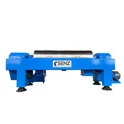

Hey there! As a supplier of mining decanter centrifuges, I've seen firsthand how the material of the conveyor can have a huge impact on the performance of these machines. In this blog, I'll break down why the conveyor material matters and how it can affect your mining operations.
First off, let's talk about what a mining decanter centrifuge does. It's a piece of equipment used to separate solids from liquids in mining processes. The conveyor inside the centrifuge plays a crucial role in moving the separated solids out of the machine. And the material of this conveyor can make or break the centrifuge's performance.
1. Wear Resistance
One of the most important factors when it comes to the conveyor material is wear resistance. In mining, the solids being separated can be extremely abrasive. For example, in metal mining, there are often hard particles like quartz and pyrite. If the conveyor material isn't wear - resistant, it will start to deteriorate quickly.
Let's say we use a conveyor made of a soft metal. Over time, the constant rubbing against the abrasive solids will cause the conveyor to wear down. This can lead to reduced efficiency as the conveyor may not be able to move the solids as effectively. Holes or cracks can form in the conveyor, which can cause the solids to leak back into the liquid phase, reducing the separation efficiency.
On the other hand, if we use a high - wear - resistant material like hardened steel or a special composite, the conveyor can withstand the abrasive forces for a much longer time. This means less downtime for maintenance and replacement, and more consistent performance of the mining decanter centrifuge.


2. Corrosion Resistance
Mining environments can be harsh, and there are often corrosive substances present. For instance, in acid mine drainage, there are high levels of acids and heavy metals. If the conveyor material is not corrosion - resistant, it will start to corrode.
Corrosion can weaken the structure of the conveyor. A corroded conveyor may break or deform, which can disrupt the normal operation of the centrifuge. It can also contaminate the separated solids and liquids. For example, if the conveyor is made of a metal that corrodes easily, the rust particles can mix with the separated solids, reducing their quality.
Using corrosion - resistant materials such as stainless steel or certain plastics can prevent these issues. Stainless steel has a protective oxide layer that resists corrosion, while some plastics are inherently resistant to many chemicals found in mining environments. This ensures the longevity of the conveyor and the overall performance of the centrifuge.
3. Temperature Resistance
Mining processes can generate a lot of heat. For example, in some high - temperature ore - processing operations, the temperature inside the centrifuge can rise significantly. If the conveyor material can't withstand high temperatures, it can deform or lose its mechanical properties.
A conveyor that deforms due to high temperatures may not be able to move the solids properly. It can also cause problems with the alignment of the centrifuge, leading to vibrations and reduced separation efficiency. Materials like heat - resistant alloys or ceramics are great choices for high - temperature mining applications. They can maintain their shape and strength even under extreme heat, ensuring the smooth operation of the centrifuge.
4. Impact on Separation Efficiency
The material of the conveyor can directly impact the separation efficiency of the mining decanter centrifuge. A well - designed and high - quality conveyor material can ensure that the solids are moved out of the centrifuge quickly and efficiently.
If the conveyor is made of a material that has good friction properties, it can grip the solids better and move them along without slipping. This means that the solids are removed from the liquid phase more effectively, resulting in a higher - quality separation. On the other hand, a conveyor with poor friction or mechanical properties may not be able to move the solids properly, leading to a lower separation efficiency.
5. Cost - effectiveness
When choosing the conveyor material, cost - effectiveness is also an important consideration. While high - performance materials like special alloys or composites may be more expensive upfront, they can save you money in the long run.
A wear - resistant and corrosion - resistant conveyor will last longer, reducing the frequency of replacements. This means less money spent on new conveyors and less downtime for maintenance. In contrast, using a cheaper but lower - quality material may seem like a good idea at first, but it can end up costing more in the long term due to frequent replacements and reduced centrifuge performance.
Related Products
If you're interested in other types of decanter centrifuges, we have some great options. Check out our Manure Decanter, which is designed for separating solids from manure. We also have the Drycake DR Decanter Centrifuge, which is ideal for applications where you need to produce dry cakes. And for wastewater treatment, our Wastewater Treatment Sludge Dewatering centrifuge can help you separate sludge from water effectively.
Conclusion
In conclusion, the material of the conveyor in a mining decanter centrifuge has a significant impact on its performance. Wear resistance, corrosion resistance, temperature resistance, separation efficiency, and cost - effectiveness are all factors that are influenced by the conveyor material. As a supplier, we understand the importance of choosing the right material for your specific mining application.
If you're in the market for a mining decanter centrifuge or need to replace the conveyor in your existing centrifuge, we're here to help. We can provide you with high - quality conveyors made of the right materials to ensure optimal performance. Don't hesitate to reach out to us for more information and to start a discussion about your specific needs.
References
- Smith, J. (2018). "Materials for Mining Equipment". Mining Journal.
- Brown, A. (2020). "The Impact of Conveyor Materials on Centrifuge Performance". Industrial Engineering Review.