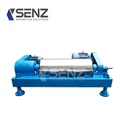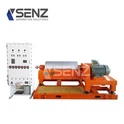

The efficiency of a manure decanter centrifuge in separating solids is a crucial aspect for many industries, especially those dealing with livestock waste management. As a leading supplier of manure decanter centrifuges, we understand the importance of this equipment in effectively separating solids from liquid manure, and we are committed to providing high - performance solutions to our customers.
Understanding the Manure Decanter Centrifuge
A manure decanter centrifuge is a specialized piece of equipment designed to separate solid and liquid components of manure. It operates on the principle of centrifugal force. When the manure is fed into the centrifuge, the rapid rotation of the centrifuge bowl creates a strong centrifugal field. This force causes the heavier solid particles to move towards the outer wall of the bowl, while the lighter liquid phase remains closer to the center.


The efficiency of the centrifuge in separating solids can be measured by several factors. One of the key metrics is the dry matter content of the separated solids. A higher dry matter content indicates that more water has been removed from the solids, resulting in a more concentrated and easier - to - handle solid product.
Factors Affecting the Efficiency of Solid Separation
Manure Characteristics
The nature of the manure itself plays a significant role in the efficiency of solid separation. Manure from different livestock species can have varying physical and chemical properties. For example, dairy manure may have a different particle size distribution and organic matter content compared to poultry manure. Manure with a higher proportion of fine particles may be more difficult to separate efficiently, as these particles tend to stay suspended in the liquid phase.
Centrifuge Design and Operation
The design of the manure decanter centrifuge is also critical. Factors such as the bowl diameter, length, and the speed of rotation can all impact the separation efficiency. A larger bowl diameter generally allows for a greater volume of manure to be processed, while a longer bowl provides more time for the separation process to occur. The speed of rotation affects the centrifugal force, with higher speeds typically resulting in better separation.
Proper operation of the centrifuge is equally important. The feed rate of the manure into the centrifuge must be carefully controlled. If the feed rate is too high, the centrifuge may not have enough time to separate the solids effectively. On the other hand, if the feed rate is too low, the centrifuge may not be operating at its optimal capacity.
Flocculation
Flocculation is a process that can significantly improve the efficiency of solid separation in a manure decanter centrifuge. By adding a flocculant to the manure, the fine particles can be aggregated into larger flocs. These larger flocs are easier to separate from the liquid phase, as they settle more quickly under the influence of the centrifugal force. The type and dosage of the flocculant need to be carefully selected based on the characteristics of the manure.
Measuring the Efficiency of Solid Separation
To accurately measure the efficiency of a manure decanter centrifuge in separating solids, several methods can be used. One common approach is to measure the dry matter content of the separated solids and the liquid phase before and after the separation process. The difference in dry matter content can provide an indication of how effectively the centrifuge is removing water from the solids.
Another method is to analyze the particle size distribution of the separated solids. A well - functioning centrifuge should be able to separate a significant portion of the larger particles from the liquid phase. By comparing the particle size distribution of the feed manure and the separated solids, we can assess the efficiency of the separation process.
Applications and Benefits of High - Efficiency Solid Separation
Livestock Farms
On livestock farms, efficient solid separation using a manure decanter centrifuge offers several benefits. The separated solids can be used as a valuable source of organic fertilizer. By removing the excess water, the solids are easier to store, transport, and apply to fields. This not only reduces the volume of manure that needs to be managed but also provides a more concentrated and nutrient - rich fertilizer.
Environmental Protection
Efficient solid separation also has positive environmental impacts. By reducing the amount of solids in the liquid manure, the risk of water pollution is decreased. The separated solids can be managed in a more environmentally friendly way, such as through composting. Additionally, the separated liquid can be further treated or reused, reducing the overall water consumption on the farm.
Our Manure Decanter Centrifuges
As a supplier of manure decanter centrifuges, we offer a range of high - quality products designed to meet the diverse needs of our customers. Our centrifuges are equipped with advanced technology to ensure efficient solid separation. We also provide comprehensive after - sales service, including installation, maintenance, and technical support.
In addition to manure decanter centrifuges, we also offer other types of centrifuges for different applications. For example, our Heparin Sodium Treatment Centrifuge is designed for the treatment of heparin sodium, and our Centrifuge Sludge Separator is suitable for separating sludge from various industrial processes. We also have Oil Field Centrifuge for oil field applications.
Contact Us for Purchase and Consultation
If you are interested in our manure decanter centrifuges or other centrifuge products, we invite you to contact us for more information. Our experienced sales team can provide detailed product specifications, pricing, and technical advice. We are committed to helping you find the most suitable centrifuge solution for your specific needs. We look forward to establishing a long - term business relationship with you and providing you with high - quality products and excellent service.
References
- Smith, J. (2018). "Principles of Centrifugal Separation in Agricultural Waste Management." Journal of Agricultural Engineering, 25(3), 123 - 135.
- Johnson, R. (2019). "Optimizing the Performance of Manure Decanter Centrifuges." Proceedings of the International Conference on Livestock Waste Management, 45 - 52.
- Brown, A. (2020). "Effects of Flocculation on Solid Separation in Manure Decanter Centrifuges." Journal of Environmental Science and Technology, 32(4), 210 - 220.