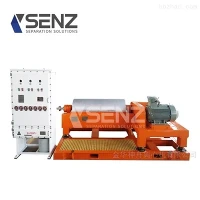

Hey there! As a supplier of DDGS dewatering centrifuges, I've seen firsthand the crucial role that the lubrication system plays in the operation of these machines. In this blog post, I'll dive into the effects of the lubrication system on the operation of a DDGS dewatering centrifuge, and why it's so important to keep it in top-notch condition.
First off, let's talk about what a DDGS dewatering centrifuge does. DDGS, or Distillers Dried Grains with Solubles, are a byproduct of the ethanol production process. These grains are rich in protein and other nutrients, making them a valuable feed ingredient for livestock. However, they also contain a significant amount of moisture, which needs to be removed before they can be used as feed. That's where the DDGS dewatering centrifuge comes in. It uses centrifugal force to separate the liquid from the solid components of the DDGS, reducing the moisture content and making them suitable for storage and transportation.
Now, let's get to the heart of the matter: the lubrication system. The lubrication system in a DDGS dewatering centrifuge is responsible for reducing friction and wear between the moving parts of the machine. This is crucial because the centrifuge operates at high speeds, and without proper lubrication, the parts would quickly wear out, leading to breakdowns and costly repairs.
One of the main effects of a well-functioning lubrication system is improved efficiency. When the moving parts of the centrifuge are properly lubricated, they can move more smoothly and with less resistance. This means that the centrifuge can operate at its optimal speed and performance, separating the liquid from the solid components of the DDGS more effectively. As a result, you'll get a higher quality product with a lower moisture content, which is more valuable in the market.


Another important effect of the lubrication system is increased reliability. By reducing friction and wear, the lubrication system helps to extend the lifespan of the centrifuge's components. This means that you'll have fewer breakdowns and less downtime, which can save you a lot of money in the long run. Additionally, a well-lubricated centrifuge is less likely to experience sudden failures, which can be dangerous and costly.
In addition to improving efficiency and reliability, the lubrication system also plays a role in maintaining the safety of the centrifuge. When the moving parts are properly lubricated, they are less likely to overheat or catch fire. This is especially important in a high-speed machine like a DDGS dewatering centrifuge, where the risk of fire is always present. By keeping the lubrication system in good condition, you can help to prevent accidents and ensure the safety of your workers.
So, how do you ensure that the lubrication system in your DDGS dewatering centrifuge is working properly? The first step is to choose the right lubricant for your machine. Different centrifuges require different types of lubricants, so it's important to consult the manufacturer's recommendations. You should also make sure to use high-quality lubricants that are designed to withstand the high speeds and temperatures of the centrifuge.
In addition to choosing the right lubricant, you also need to maintain the lubrication system regularly. This includes checking the oil level and quality, changing the oil at the recommended intervals, and inspecting the lubrication system for any signs of damage or wear. By taking these steps, you can help to ensure that the lubrication system in your centrifuge is working properly and that your machine is operating at its best.
Now, let's take a look at some of the different types of lubrication systems that are commonly used in DDGS dewatering centrifuges. One of the most common types is the oil bath lubrication system. In this system, the moving parts of the centrifuge are submerged in an oil bath, which provides continuous lubrication. This type of system is relatively simple and inexpensive, but it can be messy and requires regular maintenance.
Another type of lubrication system is the oil mist lubrication system. In this system, a fine mist of oil is sprayed onto the moving parts of the centrifuge, providing lubrication without the need for a large oil bath. This type of system is more efficient and cleaner than the oil bath system, but it can be more expensive and requires more complex equipment.
Finally, there is the grease lubrication system. In this system, grease is applied to the moving parts of the centrifuge, providing long-lasting lubrication. This type of system is relatively simple and requires less maintenance than the oil bath or oil mist systems, but it can be more difficult to apply and may not be suitable for all types of centrifuges.
As a supplier of DDGS dewatering centrifuges, I also offer a range of other centrifuge products that may be of interest to you. For example, we have the Black Diesel Oil Centrifuge, which is designed to separate impurities from black diesel oil, improving its quality and performance. We also have the Avocado Oil Production Line Decanter, which is used in the production of avocado oil, separating the oil from the pulp and other impurities. And if you're looking for a centrifuge for drycake applications, we have the Drycake DR Decanter Centrifuge, which is designed to produce a dry cake with a low moisture content.
In conclusion, the lubrication system plays a crucial role in the operation of a DDGS dewatering centrifuge. By reducing friction and wear, improving efficiency and reliability, and maintaining the safety of the machine, the lubrication system helps to ensure that your centrifuge is operating at its best. If you're in the market for a DDGS dewatering centrifuge or any other type of centrifuge, I encourage you to contact me to discuss your needs. I'd be happy to help you find the right machine for your application and provide you with the support and service you need to keep it running smoothly.
References
- "Centrifuge Handbook." Industrial Centrifuge Manufacturers Association.
- "Lubrication Basics." Machinery Lubrication Magazine.
- "DDGS Production and Utilization." American Coalition for Ethanol.