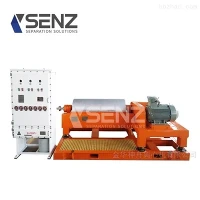

Sewage decanter centrifuges are crucial pieces of equipment in wastewater treatment processes. As a leading supplier of sewage decanter centrifuges, we understand the importance of cooling requirements for these machines to ensure their efficient and reliable operation. In this blog, we will delve into the cooling requirements for sewage decanter centrifuges, exploring the reasons behind cooling, the different cooling methods, and how to determine the appropriate cooling solution for your specific needs.
Why Cooling is Necessary for Sewage Decanter Centrifuges
Sewage decanter centrifuges operate at high speeds, generating a significant amount of heat during the separation process. The heat is mainly produced by the friction between the rotating parts, such as the bowl and the conveyor, as well as the mechanical energy converted into heat during the separation of solids and liquids. If this heat is not properly dissipated, it can lead to several problems:
- Reduced Efficiency: Excessive heat can cause the viscosity of the sewage to change, affecting the separation efficiency of the centrifuge. High temperatures can also lead to the degradation of the lubricants used in the centrifuge, reducing the performance of the bearings and other moving parts.
- Equipment Damage: Prolonged exposure to high temperatures can cause thermal expansion of the centrifuge components, leading to misalignment and premature wear. This can result in costly repairs and downtime, affecting the overall productivity of the wastewater treatment plant.
- Safety Risks: Overheating can pose a safety risk to the operators and the surrounding environment. High temperatures can cause the centrifuge to malfunction, leading to leaks or even explosions in extreme cases.
Therefore, cooling is essential to maintain the optimal operating temperature of the sewage decanter centrifuge, ensuring its efficiency, reliability, and safety.
Cooling Methods for Sewage Decanter Centrifuges
There are several cooling methods available for sewage decanter centrifuges, each with its own advantages and disadvantages. The choice of cooling method depends on various factors, such as the size of the centrifuge, the operating conditions, and the available resources. Here are some common cooling methods:


Air Cooling
Air cooling is the simplest and most cost-effective cooling method for sewage decanter centrifuges. It involves using fans or blowers to circulate air around the centrifuge, dissipating the heat generated during operation. Air cooling is suitable for small to medium-sized centrifuges operating in relatively low-temperature environments.
Advantages:
- Low Cost: Air cooling systems are relatively inexpensive to install and maintain, making them a popular choice for budget-conscious customers.
- Simple Installation: Air cooling systems are easy to install and do not require complex plumbing or electrical connections.
- Energy Efficient: Air cooling systems consume less energy compared to other cooling methods, reducing the operating costs of the centrifuge.
Disadvantages:
- Limited Cooling Capacity: Air cooling systems have a limited cooling capacity and may not be suitable for large centrifuges or those operating in high-temperature environments.
- Noise Pollution: The fans or blowers used in air cooling systems can generate significant noise, which may be a concern in some applications.
Water Cooling
Water cooling is a more efficient cooling method for sewage decanter centrifuges, especially for large centrifuges or those operating in high-temperature environments. It involves using water as a coolant to absorb the heat generated by the centrifuge. Water cooling systems can be either open-loop or closed-loop.
Open-loop water cooling systems use a continuous supply of fresh water to cool the centrifuge. The water is circulated through a heat exchanger, where it absorbs the heat from the centrifuge and is then discharged. Open-loop systems are simple and cost-effective, but they require a large amount of water and may not be suitable for areas with limited water resources.
Closed-loop water cooling systems, on the other hand, use a closed circuit of water to cool the centrifuge. The water is circulated through a heat exchanger, where it absorbs the heat from the centrifuge and is then cooled by a cooling tower or a chiller. Closed-loop systems are more efficient and environmentally friendly, but they are more complex and expensive to install and maintain.
Advantages:
- High Cooling Capacity: Water cooling systems have a higher cooling capacity compared to air cooling systems, making them suitable for large centrifuges or those operating in high-temperature environments.
- Precise Temperature Control: Water cooling systems can provide precise temperature control, ensuring that the centrifuge operates at the optimal temperature.
- Quiet Operation: Water cooling systems are generally quieter than air cooling systems, reducing noise pollution in the workplace.
Disadvantages:
- High Cost: Water cooling systems are more expensive to install and maintain compared to air cooling systems.
- Complex Installation: Water cooling systems require complex plumbing and electrical connections, which can increase the installation time and cost.
- Water Consumption: Open-loop water cooling systems require a large amount of water, which may not be sustainable in areas with limited water resources.
Oil Cooling
Oil cooling is a specialized cooling method for sewage decanter centrifuges that use oil as a coolant. Oil cooling systems are commonly used in high-speed centrifuges or those operating in harsh environments. The oil is circulated through a heat exchanger, where it absorbs the heat from the centrifuge and is then cooled by a cooling tower or a chiller.
Advantages:
- High Cooling Capacity: Oil cooling systems have a high cooling capacity, making them suitable for high-speed centrifuges or those operating in harsh environments.
- Lubrication and Cooling: Oil cooling systems can also provide lubrication to the centrifuge components, reducing friction and wear.
- Corrosion Protection: Oil cooling systems can protect the centrifuge components from corrosion, extending their lifespan.
Disadvantages:
- High Cost: Oil cooling systems are more expensive to install and maintain compared to air and water cooling systems.
- Complex Installation: Oil cooling systems require complex plumbing and electrical connections, which can increase the installation time and cost.
- Oil Maintenance: Oil cooling systems require regular oil changes and maintenance to ensure their proper operation.
Determining the Appropriate Cooling Solution
To determine the appropriate cooling solution for your sewage decanter centrifuge, you need to consider several factors, such as the size of the centrifuge, the operating conditions, and the available resources. Here are some steps to help you make the right decision:
Step 1: Assess the Cooling Requirements
The first step is to assess the cooling requirements of your sewage decanter centrifuge. This includes determining the heat generated by the centrifuge during operation, the ambient temperature, and the desired operating temperature. You can consult the manufacturer's specifications or use a thermal analysis software to estimate the cooling requirements.
Step 2: Evaluate the Available Cooling Methods
Once you have determined the cooling requirements, you need to evaluate the available cooling methods. Consider the advantages and disadvantages of each method, as well as the cost, installation, and maintenance requirements. You can also consult with a cooling system expert to get their recommendations.
Step 3: Consider the Operating Conditions
The operating conditions of your sewage decanter centrifuge, such as the temperature, humidity, and air quality, can also affect the choice of cooling method. For example, if the centrifuge is operating in a high-temperature environment, you may need a more efficient cooling method, such as water or oil cooling. If the centrifuge is operating in a dusty or dirty environment, you may need a cooling system that is resistant to dust and debris.
Step 4: Determine the Budget
The cost of the cooling system is an important factor to consider. You need to determine your budget and choose a cooling method that is within your budget. However, you should also consider the long-term operating costs, such as energy consumption and maintenance, when making your decision.
Conclusion
Cooling is an essential requirement for sewage decanter centrifuges to ensure their efficient and reliable operation. By understanding the cooling requirements and the available cooling methods, you can choose the appropriate cooling solution for your specific needs. As a leading supplier of sewage decanter centrifuges, we offer a range of cooling systems to meet the diverse needs of our customers. If you are interested in learning more about our products or have any questions, please feel free to contact us for a consultation. We look forward to working with you to provide the best solution for your wastewater treatment needs.
References
- "Centrifugal Separation Technology," by Michael K. Eskridge and James D. Mize.
- "Wastewater Treatment: Principles and Design," by George Tchobanoglous, Franklin L. Burton, and H. David Stensel.
- "Chemical Engineering Design," by Gavin Towler and Ray Sinnott.