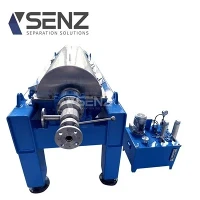

As a leading supplier of Oil Water Separators, I've witnessed firsthand the diverse needs and preferences of industries when it comes to managing their oil-water separation processes. In this blog, we'll explore the differences between horizontal and vertical oil water separators, shedding light on their unique features, advantages, and applications. This knowledge will not only help you make an informed decision but also ensure that you choose the most suitable separator for your specific requirements.
Working Principle
Let's start by understanding the working principles behind horizontal and vertical oil water separators. The fundamental concept of both types is to separate oil and water based on their different densities. However, the way they achieve this separation varies significantly.
Horizontal oil water separators operate on the principle of gravity separation. The mixture of oil and water enters the separator horizontally, and as it flows through the chamber, the oil, being lighter, rises to the top, while the water settles at the bottom. The separator is designed with a series of baffles and plates that slow down the flow of the mixture, allowing more time for the separation to occur. This design is particularly effective for separating large volumes of oil and water with a significant difference in density.
On the other hand, vertical oil water separators use a vertical flow pattern. The oil-water mixture is introduced at the bottom of the separator, and as it rises, the oil droplets coalesce and float to the surface, while the water is discharged from the bottom. The vertical design allows for a more compact footprint and can be more effective in separating fine oil droplets. The internal structure of vertical separators often includes coalescing media, which helps to increase the size of the oil droplets, making them easier to separate.
Design and Construction
The design and construction of horizontal and vertical oil water separators also differ significantly. Horizontal separators are typically larger in size and have a rectangular or cylindrical shape. They are often made of steel or fiberglass and are designed to withstand high pressures and harsh operating conditions. The large surface area of the horizontal separator allows for a more gradual separation process, which is beneficial for separating large volumes of oil and water.
Vertical separators, on the other hand, are more compact and have a cylindrical shape. They are often made of stainless steel or other corrosion-resistant materials and are designed to be installed in a vertical position. The vertical design allows for a smaller footprint, which is ideal for applications where space is limited. Additionally, vertical separators are often easier to install and maintain compared to horizontal separators.
Efficiency and Performance
When it comes to efficiency and performance, both horizontal and vertical oil water separators have their own advantages. Horizontal separators are generally more efficient in separating large volumes of oil and water with a significant difference in density. The large surface area and slow flow rate allow for a more complete separation, resulting in a higher quality of separated oil and water.
Vertical separators, on the other hand, are more effective in separating fine oil droplets. The vertical flow pattern and the use of coalescing media help to increase the size of the oil droplets, making them easier to separate. This makes vertical separators a better choice for applications where the oil droplets are small and difficult to separate.


Applications
The choice between horizontal and vertical oil water separators depends largely on the specific application. Horizontal separators are commonly used in industries such as oil and gas, petrochemical, and refineries, where large volumes of oil and water need to be separated. They are also suitable for applications where the oil and water have a significant difference in density.
Vertical separators, on the other hand, are commonly used in industries such as food and beverage, pharmaceutical, and automotive, where space is limited and the oil droplets are small. They are also suitable for applications where a high level of separation efficiency is required.
Cost Considerations
Another important factor to consider when choosing between horizontal and vertical oil water separators is the cost. Horizontal separators are generally more expensive to purchase and install due to their larger size and more complex design. However, they often have a lower operating cost due to their higher efficiency and longer lifespan.
Vertical separators, on the other hand, are generally less expensive to purchase and install due to their smaller size and simpler design. However, they may have a higher operating cost due to the need for more frequent maintenance and replacement of the coalescing media.
Conclusion
In conclusion, both horizontal and vertical oil water separators have their own unique features, advantages, and applications. The choice between the two depends on a variety of factors, including the specific application, the volume of oil and water to be separated, the size of the oil droplets, the available space, and the cost. As a supplier of Link: Oil Water Separator, we have the expertise and experience to help you choose the most suitable separator for your needs.
If you're in the process of selecting an oil water separator for your business, or if you have any questions about our products, we encourage you to reach out to us. We're here to provide you with detailed information, offer personalized solutions, and assist you through the entire purchasing process. Whether it's a horizontal or vertical separator, we can ensure that you get a high-quality, efficient, and cost-effective solution for your oil-water separation needs.
References
- "Oil-Water Separation Technologies: A Review" by X. Zhang et al., Journal of Environmental Management.
- "Design and Operation of Oil-Water Separators" by the American Petroleum Institute.
- "Principles of Coalescence in Oil-Water Separation" by M. F. Showalter, Separation Science and Technology.