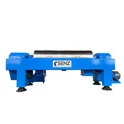

Hey there! As a supplier of Gluten Wheat Flour Separators, I've seen my fair share of problems that customers run into. In this blog, I'll share some insights on how to solve those common issues with these machines.
Understanding the Gluten Wheat Flour Separator
First off, let's quickly go over what a Gluten Wheat Flour Separator does. It's a crucial piece of equipment in the wheat processing industry. Its main job is to separate gluten from wheat flour, which is essential for producing high - quality flour products. The separator works by using a combination of mechanical and sometimes pneumatic forces to separate the gluten from the flour particles.
Common Problems and Solutions
1. Low Separation Efficiency
One of the most common problems is low separation efficiency. You might notice that the gluten isn't being separated as well as it should be, and there's still a significant amount of gluten left in the flour.
Possible Causes:
- Worn - out sieves: Over time, the sieves in the separator can get worn. If the holes in the sieves are too large or damaged, they won't be able to effectively separate the gluten from the flour.
- Incorrect airflow: The airflow in the separator plays a crucial role in the separation process. If the airflow is too weak or too strong, it can affect the separation efficiency.
Solutions:
- Replace the sieves regularly. Make sure to use high - quality sieves that are the right size for your separator. You can check the sieves for signs of wear and tear, such as holes or frayed edges, and replace them as needed.
- Adjust the airflow. Most separators have settings to control the airflow. You can refer to the user manual to find the optimal airflow settings for your specific machine. Sometimes, a simple adjustment can make a big difference in the separation efficiency.
2. Clogging
Clogging is another headache for users of Gluten Wheat Flour Separators. When the machine gets clogged, it can slow down the production process and even cause damage to the equipment.
Possible Causes:
- Excessive moisture in the wheat: If the wheat has too much moisture, it can stick together and cause clogging in the separator.
- Large foreign objects: Sometimes, large foreign objects like stones or pieces of metal can get into the wheat and block the separator.
Solutions:
- Dry the wheat properly before processing. You can use a dryer to reduce the moisture content of the wheat to an appropriate level. This will prevent the wheat from sticking together and causing clogs.
- Install a pre - cleaning system. A pre - cleaning system can help remove large foreign objects from the wheat before it enters the separator. This can significantly reduce the risk of clogging.
3. Noise and Vibration
Excessive noise and vibration can be a sign that something is wrong with the Gluten Wheat Flour Separator. It can also be a nuisance for the operators.
Possible Causes:
- Loose parts: Over time, the parts of the separator can become loose due to regular use. Loose parts can cause the machine to vibrate and make noise.
- Unbalanced components: If the components of the separator are not balanced properly, it can also lead to excessive vibration and noise.
Solutions:
- Tighten all the loose parts. Regularly check the bolts, nuts, and other fasteners on the separator and tighten them as needed.
- Balance the components. You may need to consult a professional technician to balance the components of the separator. They can use specialized equipment to ensure that the machine is running smoothly.
Related Products
If you're interested in other types of processing equipment, we also offer some related products. For example, we have the DDGS Dewatering Centrifuge, which is great for dewatering distillers dried grains with solubles. We also have the Sugar Cane Juice Machine for extracting juice from sugar cane, and the Humic Acid Potassium Extraction Machine for extracting humic acid potassium.
Conclusion
Solving the problems of a Gluten Wheat Flour Separator requires a good understanding of the machine and its operation. By addressing common issues like low separation efficiency, clogging, and noise and vibration, you can ensure that your separator runs smoothly and efficiently.


If you're facing any problems with your Gluten Wheat Flour Separator or are interested in purchasing one, don't hesitate to reach out. We're here to help you find the best solutions for your wheat processing needs.
References
- Wheat Processing Handbook, 3rd Edition
- Manufacturer's Manual for Gluten Wheat Flour Separators