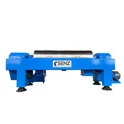

Viscosity is a critical physical property that significantly impacts the operation of a decanter centrifuge, especially when dealing with manure. As a supplier of manure decanter centrifuges, I've witnessed firsthand how the viscosity of manure can influence the efficiency and effectiveness of the centrifuge process. In this blog, we'll explore the relationship between manure viscosity and the operation of a decanter centrifuge, and how understanding this relationship can help optimize the performance of your equipment.
Understanding Manure Viscosity
Viscosity refers to a fluid's resistance to flow. In the context of manure, it is influenced by several factors, including the composition of the manure, the presence of solids, and the temperature. Manure typically contains a mixture of water, organic matter, and various solids such as undigested feed, bedding materials, and microorganisms. The proportion of these components can vary widely depending on the type of livestock, their diet, and the management practices employed.
Higher viscosity manure is thicker and more resistant to flow. This can be due to a higher concentration of solids, a greater proportion of organic matter, or a lower temperature. For example, manure from dairy cows that are fed a high-fiber diet may have a higher viscosity compared to manure from pigs or chickens. Additionally, manure that has been stored for a longer period or in colder conditions may also exhibit increased viscosity.
Impact on Decanter Centrifuge Operation
The viscosity of manure has a profound impact on the operation of a decanter centrifuge. Here are some of the key ways in which viscosity affects the centrifuge process:
Separation Efficiency
One of the primary functions of a decanter centrifuge is to separate the solid and liquid components of manure. The centrifuge uses centrifugal force to separate the heavier solids from the lighter liquid phase. However, when the viscosity of the manure is high, the solids are more likely to remain suspended in the liquid, making it more difficult for the centrifuge to achieve effective separation. This can result in a lower quality of the separated solids and a higher concentration of solids in the liquid effluent.
Feed Rate
The viscosity of manure also affects the feed rate of the decanter centrifuge. A higher viscosity manure requires more energy to pump through the centrifuge, which can limit the maximum feed rate. If the feed rate is too high, the centrifuge may not be able to process the manure effectively, leading to poor separation and potential clogging of the centrifuge. On the other hand, if the feed rate is too low, the centrifuge may not be operating at its optimal capacity, resulting in reduced productivity.
Wear and Tear
High viscosity manure can cause increased wear and tear on the decanter centrifuge components. The thicker manure can put more stress on the centrifuge's bearings, seals, and other moving parts, leading to premature failure and increased maintenance costs. Additionally, the high viscosity can also cause the solids to adhere to the centrifuge bowl and screw conveyor, which can further reduce the efficiency of the centrifuge and increase the risk of clogging.
Power Consumption
The viscosity of manure also affects the power consumption of the decanter centrifuge. A higher viscosity manure requires more energy to rotate the centrifuge bowl and to separate the solids from the liquid. This can result in increased power consumption and higher operating costs. Therefore, it is important to optimize the centrifuge operation to minimize power consumption while still achieving effective separation.
Strategies for Dealing with High Viscosity Manure
To overcome the challenges posed by high viscosity manure, several strategies can be employed:
Pre - treatment
Pre - treatment of the manure can help reduce its viscosity. This can include processes such as dilution with water, heating, or the addition of chemicals to break down the organic matter. Dilution with water can reduce the concentration of solids and lower the viscosity of the manure. Heating the manure can also reduce its viscosity by increasing the mobility of the molecules. Chemical additives, such as enzymes or surfactants, can be used to break down the organic matter and reduce the viscosity of the manure.
Adjusting Centrifuge Parameters
The operating parameters of the decanter centrifuge can be adjusted to optimize the separation process for high viscosity manure. This can include adjusting the rotational speed of the centrifuge bowl, the differential speed between the bowl and the screw conveyor, and the feed rate. By adjusting these parameters, the centrifuge can be optimized to achieve the best possible separation efficiency for the specific viscosity of the manure.
Regular Maintenance
Regular maintenance of the decanter centrifuge is essential to ensure its optimal performance when dealing with high viscosity manure. This includes cleaning the centrifuge bowl and screw conveyor regularly to prevent the buildup of solids, inspecting and replacing worn - out components, and lubricating the moving parts. By keeping the centrifuge in good condition, the risk of clogging and breakdowns can be minimized.


Other Applications of Decanter Centrifuges
In addition to manure treatment, decanter centrifuges have a wide range of applications in various industries. For example, they are commonly used in Paper Pulp Wastewater Treatment to separate the solid and liquid components of the wastewater. They are also used in Slaughterhouse Wastewater Treatment to remove solids and organic matter from the wastewater. Another application is in Soya Milk Decanter Centrifuge to separate the soya milk from the solids.
Conclusion
The viscosity of manure has a significant impact on the operation of a decanter centrifuge. Understanding the relationship between manure viscosity and centrifuge performance is crucial for optimizing the separation process and ensuring the efficient operation of the equipment. By employing strategies such as pre - treatment, adjusting centrifuge parameters, and regular maintenance, the challenges posed by high viscosity manure can be overcome.
If you are looking for a reliable manure decanter centrifuge or need more information about how to optimize the operation of your centrifuge, we are here to help. Our team of experts can provide you with the latest technology and solutions to meet your specific needs. Contact us today to start a discussion about your requirements and explore how our products can benefit your operation.
References
- Smith, J. (2018). "The Impact of Manure Viscosity on Decanter Centrifuge Performance". Journal of Agricultural Engineering.
- Brown, A. (2019). "Strategies for Handling High Viscosity Manure in Decanter Centrifuges". Proceedings of the International Symposium on Agricultural Waste Management.
- Green, C. (2020). "Optimizing Decanter Centrifuge Operation for Different Manure Viscosities". Agricultural Engineering Research Journal.