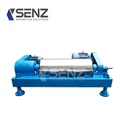

Hey there! As a supplier of 3 Phase Centrifuges, I often get asked about the performance stability of these machines. So, I thought I'd take a moment to break it down for you.
First off, let's understand what a 3 Phase Centrifuge is. It's a powerful piece of equipment used for separating mixtures into three distinct phases - typically a solid phase, a light liquid phase, and a heavy liquid phase. These centrifuges are widely used in various industries like food and beverage, chemical, and wastewater treatment.
One of the key factors contributing to the performance stability of a 3 Phase Centrifuge is its design. A well - designed centrifuge has a robust structure that can withstand the high rotational speeds and forces involved in the separation process. The materials used in construction also play a crucial role. High - quality stainless steel is commonly used, which not only provides durability but also resists corrosion. This means the centrifuge can operate continuously without significant wear and tear, ensuring long - term stability.
The motor of a 3 Phase Centrifuge is another vital component. A high - performance motor can maintain a consistent rotational speed, which is essential for accurate separation. Modern centrifuges are often equipped with variable frequency drives (VFDs). These VFDs allow for precise control of the motor speed, enabling the centrifuge to adapt to different types of mixtures and separation requirements. For example, if you're separating a mixture with a high solid content, you might need a different speed compared to a mixture with mostly liquids. The ability to adjust the speed easily helps maintain the stability of the separation process.
The control system of the centrifuge is also a game - changer. Advanced control systems can monitor various parameters such as temperature, pressure, and rotational speed in real - time. If any of these parameters deviate from the set values, the control system can automatically make adjustments. This self - regulating feature ensures that the centrifuge operates within the optimal range at all times, enhancing its performance stability.
Now, let's talk about how the 3 Phase Centrifuge performs in different applications.
In the food and beverage industry, specifically in olive oil extraction, the centrifuge needs to be highly stable. The Olive Oil Decanter Centrifuge is designed to separate the olive oil from the pulp and water. A stable performance is crucial here because any fluctuations in the separation process can affect the quality of the olive oil. The centrifuge has to be able to handle large volumes of olives continuously, and its stability ensures a consistent yield of high - quality oil.
For the extraction of other oils like avocado oil, the Horizontal Separation Equipment Olive Avocado Oil Extraction Machine is used. This machine operates under specific conditions to separate the oil from the fruit pulp and water. The stability of the centrifuge in terms of speed, temperature, and separation efficiency is essential to get the maximum amount of oil from the fruits.


In the chemical industry, 3 Phase Centrifuges are used for separating different chemical compounds. The stability of the centrifuge is vital as it can prevent cross - contamination between the phases. A well - performing centrifuge ensures that the separation is accurate, and the final products meet the required quality standards.
In wastewater treatment, the centrifuge helps in separating solids from the liquid waste. The Three - Phase Separation Decanter is often used in this process. It needs to operate continuously for long periods, and its performance stability is crucial for effective treatment. A stable centrifuge can handle different types of wastewater with varying solid contents, ensuring that the treated water meets the environmental standards.
Maintenance also plays a significant role in the performance stability of a 3 Phase Centrifuge. Regular maintenance, such as cleaning, lubrication, and inspection of components, can prevent potential problems. For example, if the bearings are not lubricated properly, they can wear out quickly, leading to vibrations and reduced stability. By following a strict maintenance schedule, you can keep the centrifuge running smoothly and extend its lifespan.
Another aspect to consider is the installation of the centrifuge. It should be installed on a stable and level surface. Any unevenness can cause vibrations during operation, which can affect the performance and stability of the centrifuge. Proper alignment of the components is also essential. If the centrifuge is not installed correctly, it may not operate efficiently, and the separation process may be compromised.
In conclusion, the performance stability of a 3 Phase Centrifuge is a result of its well - thought - out design, high - quality components, advanced control systems, and proper maintenance. Whether you're in the food, chemical, or wastewater treatment industry, a stable centrifuge can significantly improve your production process and the quality of your final products.
If you're in the market for a 3 Phase Centrifuge and want to learn more about how our products can meet your specific needs, don't hesitate to reach out. We're here to help you find the best solution for your separation requirements.
References
- General knowledge of centrifuge technology and industry best practices.
- Technical specifications of 3 Phase Centrifuges used in various applications.