Oil water separators are crucial devices in various industries, playing a significant role in separating oil from water. As an oil water separator supplier, I have in - depth knowledge of different types of oil water separators. In this blog, I will introduce the main types of oil water separators, their working principles, applications, and advantages.
Gravity Separators
Gravity separators are one of the most common types of oil water separators. The basic principle behind gravity separators is the difference in density between oil and water. Oil, being less dense than water, will rise to the surface, while water will sink to the bottom.
There are two main types of gravity separators: horizontal and vertical. Horizontal gravity separators are widely used in industrial applications. They typically consist of a long, horizontal tank where the oil - water mixture enters at one end. As the mixture flows through the tank, the oil rises to the surface and can be skimmed off, while the water is discharged from the bottom.
Vertical gravity separators, on the other hand, are more compact and are often used in situations where space is limited. The oil - water mixture enters the top of the vertical tank, and the separation occurs as the mixture settles. The oil accumulates at the top, and the water is removed from the bottom.
Gravity separators are relatively simple in design and operation, which makes them cost - effective. They are suitable for applications where the oil content in the water is relatively high and the separation requirements are not extremely strict. For example, in some oil refineries, gravity separators are used as the first step in the oil - water separation process to remove large amounts of free oil.
Coalescing Separators
Coalescing separators work on the principle of coalescence, which is the process of small oil droplets merging into larger ones. These separators contain a coalescing media, which can be made of materials such as fiberglass, polypropylene, or stainless steel.


When the oil - water mixture passes through the coalescing media, the small oil droplets adhere to the media and gradually merge into larger droplets. These larger droplets then rise to the surface due to their lower density and can be removed.
Coalescing separators are more efficient than gravity separators, especially for separating emulsified oil from water. They can achieve a higher degree of separation and are capable of removing smaller oil droplets. Coalescing separators are commonly used in industries such as automotive manufacturing, where the wastewater contains emulsified oil from machining processes.
Centrifugal Separators
Centrifugal separators use centrifugal force to separate oil from water. The oil - water mixture is fed into a rotating drum or bowl. As the drum rotates at high speed, the centrifugal force causes the denser water to move towards the outer wall of the drum, while the less dense oil moves towards the center.
There are different types of centrifugal separators, including disc stack centrifuges and decanter centrifuges. Disc stack centrifuges are highly efficient and can separate very fine oil droplets from water. They are often used in the food and beverage industry, as well as in pharmaceutical applications.
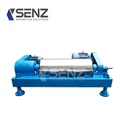
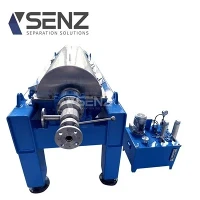
Decanter centrifuges are suitable for separating larger volumes of oil - water mixtures. They can handle both solid and liquid phases, making them useful in applications such as Oilfield Drilling Equipment. In oilfield drilling, decanter centrifuges are used to separate drilling mud from water and oil, which helps in the reuse of the drilling mud and reduces waste.
Centrifugal separators are known for their high separation efficiency and can handle a wide range of oil - water mixtures. However, they are more complex and expensive than gravity and coalescing separators.
Membrane Separators
Membrane separators use a semi - permeable membrane to separate oil from water. The membrane allows water to pass through while blocking the oil. There are different types of membranes, such as microfiltration, ultrafiltration, and reverse osmosis membranes.
Microfiltration membranes have relatively large pores and are used to separate larger oil droplets and suspended solids from water. Ultrafiltration membranes have smaller pores and can separate smaller oil droplets and some dissolved substances. Reverse osmosis membranes have the smallest pores and can remove even the smallest oil molecules and dissolved salts from water.
Membrane separators are highly effective in producing high - quality water. They are often used in applications where strict water quality requirements are necessary, such as in the electronics industry and in some environmental protection projects. However, membrane separators are prone to fouling, which can reduce their efficiency and require regular maintenance.
Adsorption Separators
Adsorption separators use adsorbent materials to remove oil from water. Adsorbent materials, such as activated carbon, zeolites, and certain polymers, have a high affinity for oil. When the oil - water mixture passes through the adsorbent bed, the oil molecules are adsorbed onto the surface of the adsorbent.
Adsorption separators are effective in removing trace amounts of oil from water. They are often used as a polishing step after other separation processes to achieve a very low oil content in the water. For example, in some water treatment plants, adsorption separators are used to remove the remaining oil after gravity and coalescing separation.
Applications of Oil Water Separators
Oil water separators are used in a wide range of industries. In the oil and gas industry, they are used to separate oil from produced water, which is an important step in environmental protection and resource recovery. In the manufacturing industry, oil water separators are used to treat wastewater from machining, metalworking, and other processes to remove oil and contaminants before discharging the water.
In the food and beverage industry, oil water separators are used to separate oil from process water, ensuring the quality of the final product and complying with environmental regulations. In the marine industry, oil water separators are installed on ships to prevent oil pollution of the sea by separating oil from bilge water.
Advantages of Different Types of Oil Water Separators
Each type of oil water separator has its own advantages. Gravity separators are simple, cost - effective, and suitable for large - scale applications. Coalescing separators are efficient in separating emulsified oil and can achieve a high degree of separation. Centrifugal separators are highly efficient and can handle a wide range of oil - water mixtures, especially those with high solids content. Membrane separators can produce high - quality water, and adsorption separators are effective in removing trace amounts of oil.
Contact for Purchase and Consultation
If you are in need of oil water separators for your business, whether it is for industrial wastewater treatment, oilfield operations, or other applications, I am here to assist you. As an experienced oil water separator supplier, I can provide you with professional advice on the most suitable type of separator for your specific needs. I can also offer high - quality products and excellent after - sales service.
Feel free to reach out to me to discuss your requirements. We can have in - depth consultations to ensure that you get the best solution for your oil - water separation needs.
References
- "Oil - Water Separation Technologies: A Review" by X. Zhang et al.
- "Handbook of Separation Process Technology" edited by R. W. Rousseau.
- "Centrifugal Separation Technology" by A. S. Mujumdar.