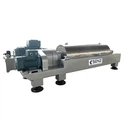

The pharmaceutical industry demands the highest standards of quality, safety, and efficiency in all its processes. Decanter machines play a crucial role in various pharmaceutical applications, such as separation, purification, and extraction. As a reliable Decanter Machine supplier, we understand the specific requirements and challenges faced by pharmaceutical manufacturers. In this blog post, we will explore the key requirements for using a Decanter Machine in the pharmaceutical industry.
1. Hygiene and Sanitation
One of the most critical requirements in the pharmaceutical industry is maintaining a high level of hygiene and sanitation. Decanter machines used in pharmaceutical applications must be designed and constructed to prevent contamination and ensure the purity of the final product.
Material Selection
The materials used in the construction of the Decanter Machine should be corrosion - resistant, non - reactive, and easy to clean. Stainless steel, particularly grades like 316L, is commonly used due to its excellent corrosion resistance and ability to withstand harsh cleaning agents. All wetted parts of the machine should be made of high - quality stainless steel to prevent any leaching of contaminants into the pharmaceutical product.
Design for Cleanability
The Decanter Machine should have a smooth and seamless design, minimizing crevices and dead spaces where bacteria and other contaminants can accumulate. It should be easy to disassemble and reassemble for thorough cleaning and inspection. Automated cleaning systems can be integrated into the machine to ensure consistent and efficient cleaning processes. For example, Clean - in - Place (CIP) systems can be used to clean the internal components of the Decanter Machine without the need for manual disassembly, saving time and reducing the risk of contamination.
2. Precision and Accuracy
In the pharmaceutical industry, precision and accuracy are of utmost importance. Decanter machines must be able to achieve high - quality separation results with minimal variability.
Separation Efficiency
The Decanter Machine should have a high separation efficiency, capable of effectively separating different phases of the pharmaceutical mixture, such as solids and liquids. This requires precise control of factors such as rotational speed, differential speed, and feed rate. Advanced control systems can be used to optimize these parameters and ensure consistent separation performance. For instance, variable frequency drives can be used to adjust the rotational speed of the Decanter Machine according to the specific requirements of the pharmaceutical process.
Particle Size Control
In many pharmaceutical applications, it is necessary to separate particles of a specific size range. The Decanter Machine should be able to provide accurate particle size control to ensure the quality of the final product. This can be achieved through the design of the centrifuge bowl and the selection of appropriate screen or filter media. For example, the Drycake DR Decanter Centrifuge is designed to provide precise particle separation, making it suitable for a wide range of pharmaceutical processes.
3. Regulatory Compliance
The pharmaceutical industry is highly regulated, and Decanter machines used in this sector must comply with various international and national regulations.
Good Manufacturing Practice (GMP)
Decanter machines should be designed and manufactured in accordance with Good Manufacturing Practice (GMP) guidelines. GMP ensures that pharmaceutical products are consistently produced and controlled to the quality standards appropriate for their intended use. This includes requirements for equipment design, installation, operation, and maintenance. Our Decanter machines are designed to meet the strict GMP requirements, providing pharmaceutical manufacturers with confidence in the quality and reliability of our products.


Other Regulatory Requirements
In addition to GMP, Decanter machines may also need to comply with other regulations, such as those related to environmental protection and worker safety. For example, the machine should be designed to minimize noise and vibration levels to protect the health of workers. It should also be equipped with appropriate safety features, such as emergency stop buttons and safety interlocks, to prevent accidents.
4. Process Flexibility
The pharmaceutical industry is constantly evolving, and manufacturers need Decanter machines that can adapt to different processes and product requirements.
Variable Operating Parameters
The Decanter Machine should allow for easy adjustment of operating parameters, such as rotational speed, differential speed, and feed rate. This enables pharmaceutical manufacturers to optimize the separation process for different products and batches. For example, a Small Decanter Centrifuge can be used for small - scale production or research and development purposes, providing flexibility in the pharmaceutical manufacturing process.
Compatibility with Different Pharmaceutical Products
The Decanter Machine should be compatible with a wide range of pharmaceutical products, including different types of drugs, biologics, and vaccines. It should be able to handle various viscosities, densities, and particle sizes of the pharmaceutical mixtures. This requires a modular design and the ability to customize the machine according to the specific requirements of the pharmaceutical product.
5. Reliability and Maintenance
Reliability is crucial in the pharmaceutical industry, as any downtime can result in significant losses in production and revenue. Decanter machines should be designed for long - term, trouble - free operation.
Robust Construction
The Decanter Machine should have a robust construction to withstand the harsh operating conditions in the pharmaceutical industry. High - quality components and materials should be used to ensure the durability of the machine. Regular maintenance and servicing are also essential to keep the machine in optimal working condition.
Easy Maintenance
The machine should be designed for easy maintenance, with accessible components and clear maintenance instructions. This reduces the time and cost of maintenance and minimizes downtime. For example, the use of standardized parts and modular design can simplify the maintenance process.
6. Energy Efficiency
In today's environmentally conscious world, energy efficiency is an important consideration for pharmaceutical manufacturers. Decanter machines should be designed to consume less energy without compromising on performance.
Advanced Motor Technology
The use of advanced motor technology, such as high - efficiency motors and variable frequency drives, can significantly reduce the energy consumption of the Decanter Machine. These technologies allow for precise control of the motor speed, matching the energy consumption to the actual requirements of the process.
Optimized Design
The design of the Decanter Machine can also be optimized to improve energy efficiency. For example, reducing friction and improving the aerodynamics of the centrifuge bowl can reduce the power required to operate the machine.
As a Decanter Machine supplier, we are committed to providing pharmaceutical manufacturers with high - quality, reliable, and efficient Decanter machines that meet all the requirements of the pharmaceutical industry. Our products, such as the Volute Screw Press, Drycake DR Decanter Centrifuge, and Small Decanter Centrifuge, are designed and manufactured to the highest standards, ensuring optimal performance and compliance with all relevant regulations.
If you are a pharmaceutical manufacturer looking for a Decanter Machine that meets your specific requirements, we invite you to contact us for a detailed consultation. Our team of experts will work with you to understand your needs and provide you with the best solution for your pharmaceutical processes.
References
- "Good Manufacturing Practice Guide for Medicinal Products in the European Union", European Commission.
- "Pharmaceutical Engineering Handbook", edited by various experts in the field.
- "Centrifugation Technology in the Pharmaceutical Industry", industry - specific research papers.