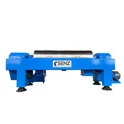

Hey there! As a supplier of DDGS Dewatering Centrifuges, I've seen my fair share of problems that customers run into with these machines. In this blog post, I'm gonna share some tips on how to solve the common issues related to DDGS dewatering centrifuges.
Understanding the Basics of DDGS Dewatering Centrifuges
Before we dive into the problems and solutions, let's quickly go over what a DDGS dewatering centrifuge does. Distillers Dried Grains with Solubles (DDGS) are a by - product of the ethanol production process. Dewatering centrifuges are used to separate the liquid and solid parts of DDGS, which helps in getting a more concentrated solid product.
Our centrifuges work on the principle of centrifugal force. The mixture of liquid and solid DDGS is fed into the centrifuge. The high - speed rotation of the centrifuge creates a centrifugal force that pushes the heavier solid particles towards the outer wall of the centrifuge bowl, while the lighter liquid moves to the center and is then discharged.
Common Problems and Their Solutions
1. Poor Dewatering Performance
One of the most common issues is poor dewatering performance. This means that the centrifuge isn't separating the liquid and solid parts of the DDGS effectively, resulting in a wetter solid product.
-
Cause 1: Wrong Speed Settings
If the centrifuge's rotation speed is too low, there won't be enough centrifugal force to separate the solid from the liquid properly. On the other hand, if it's too high, it might cause excessive wear and tear on the machine.
Solution: Check the manufacturer's guidelines for the recommended speed range. You may need to do some trial - and - error to find the optimal speed for your specific DDGS mixtures. Our technicians are always available to assist you in determining the best speed settings for your operation. -
Cause 2: Clogged Bowl or Screen
Over time, solid particles can accumulate and clog the centrifuge bowl or the screening elements. This restricts the flow of the liquid and solid, reducing the efficiency of the dewatering process.
Solution: Regularly clean the centrifuge bowl and screen. You can use a high - pressure water jet to remove the stubborn deposits. If the clogging is severe, you might need to disassemble some parts of the centrifuge carefully. For more information on proper cleaning procedures, you can refer to our user manual. -
Cause 3: Inappropriate Feed Rate
Feeding too much DDGS mixture into the centrifuge at once can overwhelm the machine, leading to poor dewatering. Similarly, a very low feed rate might not take full advantage of the centrifuge's capacity.
Solution: Adjust the feed rate according to the centrifuge's specifications. You can start with a medium feed rate and then adjust it based on the dewatering results. Using a flow control valve can help you regulate the feed rate more accurately.
2. Vibration and Noise
Excessive vibration and noise during the operation of the DDGS dewatering centrifuge can be a sign of underlying problems.
-
Cause 1: Unbalanced Rotor
If the centrifuge rotor isn't balanced correctly, it will cause vibrations. This can be due to uneven distribution of the DDGS mixture inside the rotor or damage to the rotor itself.
Solution: Stop the centrifuge immediately and check the rotor for any visible damage. If there are no signs of damage, redistribute the DDGS mixture evenly inside the rotor. You can also use a balancing tool to ensure the rotor is properly balanced. -
Cause 2: Worn - Out Bearings
Bearings support the rotating parts of the centrifuge. Over time, they can wear out, causing excessive vibration and noise.
Solution: Inspect the bearings regularly. If you notice any signs of wear, such as rough surfaces or excessive play, replace the bearings promptly. We offer high - quality replacement bearings for our centrifuges to ensure smooth operation.
3. Mechanical Failures
Mechanical failures can seriously disrupt the dewatering process.


-
Cause 1: Belt Wear and Tear
The belts in the centrifuge are responsible for transmitting power from the motor to the rotating parts. Continuous use can cause them to wear out or slip.
Solution: Check the belts regularly for signs of wear, such as cracks or fraying. If the belts are loose, adjust the tension according to the manufacturer's instructions. If the belts are too worn, replace them with new ones. -
Cause 2: Gearbox Issues
The gearbox plays a crucial role in controlling the speed of the centrifuge. Problems such as gear tooth wear, insufficient lubrication, or overheating can occur.
Solution: Ensure that the gearbox is properly lubricated at all times. Check the oil level regularly and replace the oil as recommended. If you notice any strange noises or a decrease in performance from the gearbox, have it inspected by a professional technician.
Other Types of Centrifuges We Offer
In addition to DDGS dewatering centrifuges, we also supply a variety of other centrifuges. You can check out our Scroll Discharge Decanter Centrifuge, which is suitable for different industrial applications. Our Sewage Decanter Centrifuge is designed to handle sewage treatment tasks effectively. And for those in the laboratory environment, we have the Laboratory Centrifuge.
Conclusion
Solving the problems of DDGS dewatering centrifuges requires a combination of proper maintenance, correct operation, and timely troubleshooting. By following the tips outlined in this blog post, you can keep your centrifuge running smoothly and improve its dewatering performance.
If you're facing any issues with your DDGS dewatering centrifuge or are interested in purchasing a new one, don't hesitate to get in touch with us. We're here to offer you the best solutions and support for all your centrifuge needs.
References
- "Centrifuge Operation and Maintenance Handbook"
- Industry - specific research papers on DDGS dewatering processes.