


Hey there! As a supplier of 3 - Phase Decanter Centrifuges, I've seen firsthand how crucial the bowl design is for the performance of these machines. In this blog, I'll break down how different aspects of the bowl design can impact the overall functionality and efficiency of a 3 - Phase Decanter Centrifuge.
1. Bowl Shape
The shape of the bowl in a 3 - Phase Decanter Centrifuge plays a major role in its performance. There are generally two common shapes: cylindrical and conical.
A cylindrical bowl provides a large volume for the separation process. It allows for a relatively stable flow of the mixture being processed. When the mixture enters the cylindrical part of the bowl, the centrifugal force starts to act on it. The heavier solid particles are pushed towards the outer wall of the bowl, while the lighter liquid phases start to separate based on their densities. This shape is great for handling large volumes of material at a relatively low speed. However, it might not be as efficient in achieving a high - level separation of fine particles.
On the other hand, a conical bowl is designed to enhance the separation of fine particles. As the mixture moves towards the conical end of the bowl, the cross - sectional area decreases, which increases the centrifugal force acting on the particles. This helps in better sedimentation of the solids and a more distinct separation of the three phases. The conical shape also aids in the discharge of the separated solids. The solids are pushed towards the narrow end of the cone and can be easily removed from the centrifuge.
Some 3 - Phase Decanter Centrifuges use a combination of cylindrical and conical shapes. This hybrid design combines the advantages of both. The cylindrical part provides a large processing volume, while the conical part improves the separation efficiency. For example, in the Tricanter Centrifuge, this hybrid design is often employed to achieve optimal performance.
2. Bowl Material
The material of the bowl is another important factor. The bowl needs to be strong enough to withstand the high centrifugal forces generated during operation. Commonly used materials include stainless steel and special alloys.
Stainless steel is a popular choice due to its corrosion resistance. It can handle a wide range of chemical substances without getting damaged. This is especially important when processing mixtures that contain corrosive components. For example, in the food and beverage industry, where the centrifuge might be used to separate oil, water, and solids from fruit juices or other products, stainless steel ensures that the bowl remains in good condition and doesn't contaminate the final products.
Special alloys are used in more demanding applications. They offer higher strength and better wear resistance. When dealing with abrasive solids, such as in the mining industry, a bowl made of a special alloy can last longer and maintain its performance over time. The choice of material also affects the cost of the centrifuge. Special alloys are generally more expensive than stainless steel, but they can provide a better return on investment in the long run, especially in high - wear applications.
3. Bowl Length and Diameter
The length and diameter of the bowl have a direct impact on the separation efficiency and throughput of the 3 - Phase Decanter Centrifuge.
A longer bowl provides more residence time for the mixture inside the centrifuge. This allows for a more thorough separation of the three phases. The longer the mixture stays in the bowl, the more time the centrifugal force has to act on the particles, resulting in a better separation. However, a longer bowl also means a larger machine, which might require more space and energy to operate.

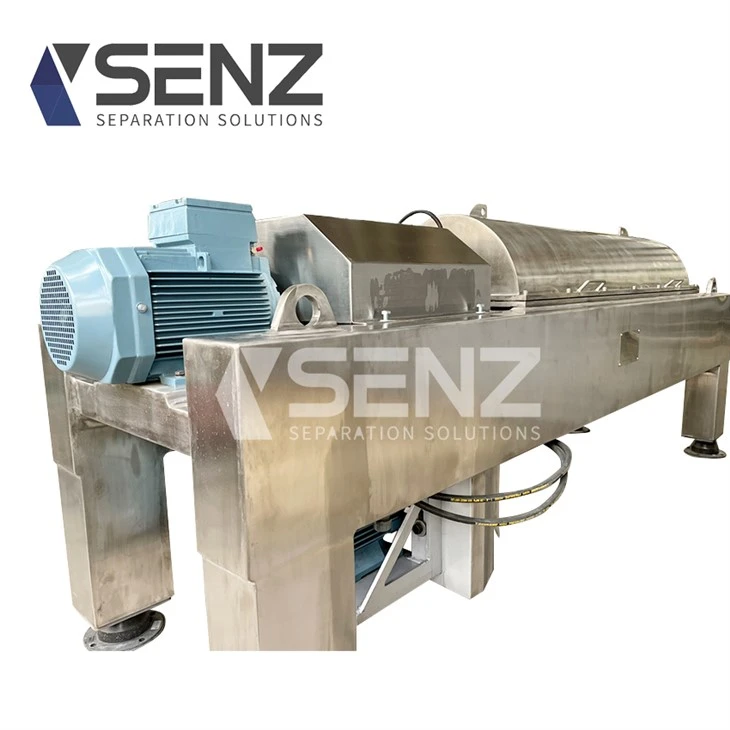
The diameter of the bowl affects the centrifugal force. A larger diameter bowl generates a higher centrifugal force at the same rotational speed. This can improve the separation of heavier particles. But it also means that the machine needs to be more powerful to rotate the larger bowl. In some cases, a balance needs to be struck between the length and diameter of the bowl to achieve the best performance for a specific application. For instance, in the 3 Phase Centrifuge, different models are available with varying bowl lengths and diameters to suit different processing requirements.
4. Bowl Speed
The rotational speed of the bowl is a critical parameter that affects the performance of the 3 - Phase Decanter Centrifuge. The higher the speed, the greater the centrifugal force acting on the mixture. This leads to a more efficient separation of the phases.
However, increasing the speed also has its limitations. Higher speeds can cause excessive vibration, which can damage the centrifuge and reduce its lifespan. It can also lead to higher energy consumption. Therefore, it's important to find the optimal speed for each application. For example, when processing a mixture with fine particles, a higher speed might be required to achieve a good separation. But for a mixture with larger particles, a lower speed might be sufficient.
The bowl speed can be adjusted based on the properties of the mixture being processed. Modern 3 - Phase Decanter Centrifuges often come with variable speed controls, which allow operators to fine - tune the speed according to the specific requirements of the job.
5. Impact on Different Industries
The bowl design of a 3 - Phase Decanter Centrifuge has different impacts on various industries.
In the food industry, such as in the Avocado And Palm Oil Extraction Centrifuge, the bowl design needs to ensure a high - quality separation of oil, water, and solids. A well - designed bowl can help in extracting the maximum amount of oil from the raw materials while maintaining the purity of the oil. The use of a suitable bowl shape and material can prevent contamination of the oil and ensure that the final product meets the industry standards.
In the wastewater treatment industry, the bowl design is crucial for separating solids from the liquid phase. A centrifuge with a proper bowl design can effectively remove suspended solids from the wastewater, reducing the environmental impact. The ability to handle different types of solids and achieve a high - level separation is essential in this industry.
In the chemical industry, where the mixtures can be highly corrosive and complex, the choice of bowl material and design is of utmost importance. The bowl needs to be able to withstand the chemical reactions and provide a reliable separation of the different components.
Conclusion
As you can see, the bowl design of a 3 - Phase Decanter Centrifuge has a significant impact on its performance. From the shape and material to the length, diameter, and speed, every aspect of the bowl design needs to be carefully considered to achieve the best results.
If you're in the market for a 3 - Phase Decanter Centrifuge, it's important to understand how the bowl design can affect the performance of the machine. We, as a supplier, can help you choose the right centrifuge based on your specific requirements. Whether you're in the food, wastewater treatment, or chemical industry, we have the expertise to provide you with a high - quality 3 - Phase Decanter Centrifuge.
If you're interested in learning more or discussing your procurement needs, feel free to reach out. We're here to assist you in finding the perfect solution for your business.
References
- Smith, J. (2018). Centrifuge Technology: Principles and Applications. Publisher X.
- Johnson, A. (2019). Advances in Separation Techniques using Decanter Centrifuges. Journal of Separation Science, 25(3), 45 - 56.


