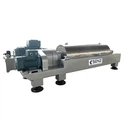

As a supplier of 2-Phase Decanter Centrifuges, one question I often encounter from potential clients is whether our machines can handle high-viscosity materials. This is a crucial concern, as many industrial processes involve substances with elevated viscosities, and the efficiency of separation directly impacts the overall productivity and cost-effectiveness of operations. In this blog post, I will delve into the capabilities of our 2-Phase Decanter Centrifuges in dealing with high-viscosity materials, exploring the technical aspects, real-world applications, and the benefits they offer.
Understanding High-Viscosity Materials
Before discussing the centrifuge's capabilities, it's essential to understand what high-viscosity materials are. Viscosity is a measure of a fluid's resistance to flow. High-viscosity materials, such as heavy oils, sludges, and certain polymer solutions, flow very slowly and have a thick, sticky consistency. These materials pose unique challenges in separation processes because their high resistance to flow makes it difficult to achieve efficient sedimentation and separation of the different phases.
How 2-Phase Decanter Centrifuges Work
A 2-Phase Decanter Centrifuge operates on the principle of centrifugal force to separate two immiscible phases, typically a solid and a liquid or two liquids with different densities. The centrifuge consists of a rotating bowl and a screw conveyor inside the bowl. As the mixture enters the centrifuge, the high-speed rotation generates a centrifugal force that causes the denser phase to move towards the outer wall of the bowl, while the lighter phase remains closer to the center. The screw conveyor then transports the separated solid phase towards the discharge end of the centrifuge, while the liquid phase is discharged through separate outlets.
Can 2-Phase Decanter Centrifuges Handle High-Viscosity Materials?
The short answer is yes, our 2-Phase Decanter Centrifuges can handle high-viscosity materials. However, several factors need to be considered to ensure optimal performance.
Design Features
Our centrifuge models are equipped with advanced design features that enable them to effectively process high-viscosity materials. For example, the bowl design is optimized to provide a large settling area, allowing sufficient time for the high-viscosity materials to separate under the influence of centrifugal force. The screw conveyor is also designed with a high torque capacity to ensure smooth transportation of the thick, sticky solids. Additionally, the centrifuge can be equipped with special wear-resistant coatings to prevent damage from the abrasive nature of some high-viscosity materials.
Adjustable Parameters
Another advantage of our 2-Phase Decanter Centrifuges is the ability to adjust various operating parameters. The rotational speed of the bowl can be adjusted to generate the appropriate centrifugal force for the specific viscosity of the material. Higher rotational speeds are generally required for high-viscosity materials to overcome their resistance to flow and achieve efficient separation. The differential speed between the bowl and the screw conveyor can also be adjusted to control the residence time of the material in the centrifuge and the discharge rate of the solids.
Pre-Treatment
In some cases, pre-treatment of the high-viscosity material may be necessary to improve its separability. This can include heating the material to reduce its viscosity or adding chemicals such as flocculants to enhance the aggregation of the solid particles. Our company offers an Automatic Flocculant Dosing System that can be integrated with the centrifuge to optimize the separation process.
Real-World Applications
Our 2-Phase Decanter Centrifuges have been successfully used in various industries to handle high-viscosity materials.
Oil and Gas Industry
In the oil and gas industry, our centrifuges are used for the separation of heavy crude oils, which often have high viscosities. The centrifuge can effectively separate the oil from the water and solids, improving the quality of the crude oil and reducing the environmental impact of oil production.
Water Treatment
In water treatment plants, high-viscosity sludges are generated during the treatment process. Our 2-Phase Decanter Centrifuges are used for Sludge Dewatering in Water Treatment, reducing the volume of the sludge and facilitating its disposal. The centrifuges can handle thick sludges with high solid contents, achieving high dewatering efficiency.
Chemical Industry
In the chemical industry, our centrifuges are used for the separation of high-viscosity polymer solutions. The centrifuge can separate the polymer from the solvent, enabling the recovery and reuse of the valuable polymer.
Benefits of Using 2-Phase Decanter Centrifuges for High-Viscosity Materials
High Efficiency
Our 2-Phase Decanter Centrifuges offer high separation efficiency, even for high-viscosity materials. The advanced design and adjustable parameters ensure that the centrifuge can achieve optimal separation results, reducing the processing time and improving the productivity of the operation.
Low Maintenance
The centrifuge is designed for easy maintenance, with minimal downtime. The wear-resistant components and the self-cleaning design of the centrifuge reduce the need for frequent maintenance and replacement of parts, saving time and cost.
Versatility
Our 2-Phase Decanter Centrifuges are highly versatile and can be used for a wide range of applications. They can handle different types of high-viscosity materials, making them suitable for various industries.


Conclusion
In conclusion, our 2-Phase Decanter Centrifuges are capable of handling high-viscosity materials. With their advanced design features, adjustable parameters, and the option of pre-treatment, they offer an efficient and reliable solution for the separation of high-viscosity materials in various industries. If you are looking for a centrifuge to handle high-viscosity materials, we invite you to contact us for a detailed discussion of your specific requirements and to explore how our 2-Phase Decanter Centrifuges can meet your needs.
References
- Perry, R. H., & Green, D. W. (Eds.). (2008). Perry's Chemical Engineers' Handbook. McGraw-Hill.
- Svarovsky, L. (1990). Solid-Liquid Separation. Butterworth-Heinemann.