


Separation accuracy is a critical parameter when it comes to fish oil decanter centrifuges. As a leading supplier of fish oil decanter centrifuges, we understand the importance of this metric in ensuring high - quality fish oil production. In this blog, we will delve into what separation accuracy means in the context of fish oil decanter centrifuges, factors that affect it, and how our products stand out in terms of achieving optimal separation accuracy.

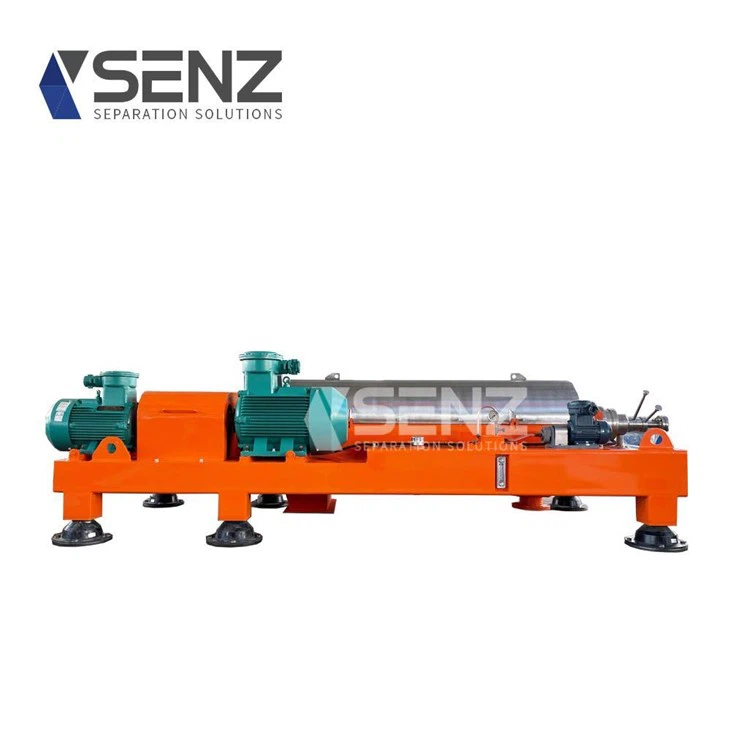
Understanding Separation Accuracy in Fish Oil Decanter Centrifuges
Separation accuracy refers to the ability of a fish oil decanter centrifuge to effectively separate different components within a fish oil mixture. The main components that need to be separated include oil, water, and solid impurities. A high - separation - accuracy centrifuge can precisely isolate the fish oil from water and solid particles, resulting in a pure and high - quality fish oil product.
The separation process in a fish oil decanter centrifuge is based on the principle of centrifugal force. When the fish oil mixture is fed into the centrifuge, the high - speed rotation generates a centrifugal force that causes the denser components (such as water and solid impurities) to move towards the outer wall of the centrifuge bowl, while the less - dense fish oil remains closer to the center. The centrifuge then separates these components through a series of mechanisms, such as the use of a scroll conveyor to remove the solid and liquid phases.
Factors Affecting Separation Accuracy
Several factors can influence the separation accuracy of a fish oil decanter centrifuge.
1. Centrifuge Design
The design of the centrifuge plays a crucial role in determining separation accuracy. A well - designed centrifuge will have an optimized bowl shape, scroll design, and flow path. For example, a centrifuge with a larger bowl diameter can provide a greater centrifugal force, which helps in better separation. Additionally, the pitch and shape of the scroll conveyor can affect the movement of the solid and liquid phases, ensuring efficient separation.
2. Rotational Speed
The rotational speed of the centrifuge is directly related to the centrifugal force generated. Higher rotational speeds generally result in stronger centrifugal forces, which can improve the separation of components. However, there is a limit to how fast a centrifuge can rotate, as excessive speed can cause damage to the equipment and may also lead to emulsification of the fish oil, reducing separation accuracy.
3. Feed Rate
The feed rate of the fish oil mixture into the centrifuge is another important factor. If the feed rate is too high, the centrifuge may not have enough time to separate the components effectively, leading to a lower separation accuracy. On the other hand, a very low feed rate may reduce the overall productivity of the centrifuge. Therefore, finding the optimal feed rate is essential for achieving high separation accuracy.
4. Properties of the Fish Oil Mixture
The properties of the fish oil mixture, such as its viscosity, density, and particle size distribution, can also impact separation accuracy. For instance, a more viscous fish oil mixture may require a higher centrifugal force or a longer separation time to achieve good separation. Similarly, if the solid particles in the mixture are very fine, they may be more difficult to separate from the oil.
Our Fish Oil Decanter Centrifuges and Separation Accuracy
At our company, we have developed fish oil decanter centrifuges that are designed to achieve high separation accuracy. Our centrifuges are engineered with advanced technologies and high - quality materials to ensure reliable and efficient operation.
We use state - of - the - art design techniques to optimize the bowl and scroll design, maximizing the separation efficiency. Our centrifuges are also equipped with variable speed drives, allowing operators to adjust the rotational speed according to the specific properties of the fish oil mixture. This flexibility ensures that we can achieve the best separation accuracy for different types of fish oil.
In addition, we provide comprehensive technical support to our customers. Our team of experts can help customers determine the optimal feed rate and operating parameters for their specific applications, further enhancing the separation accuracy of our centrifuges.
Comparison with Other Centrifuges
While fish oil decanter centrifuges are specifically designed for fish oil separation, there are other types of centrifuges available in the market that may have different applications. For example, Tailings Dewatering Decanter Centrifuge is mainly used for dewatering tailings in mining operations, and Mining Decanter Centrifuge is designed for separating solids and liquids in mining processes. Waste Oil Processing Centrifuge is used for processing waste oil to remove impurities.
These centrifuges have different design requirements and separation mechanisms compared to fish oil decanter centrifuges. However, the basic principle of using centrifugal force for separation remains the same. Our fish oil decanter centrifuges are optimized for the unique properties of fish oil, ensuring high - quality separation and a pure fish oil product.
Importance of Separation Accuracy in the Fish Oil Industry
In the fish oil industry, separation accuracy is of utmost importance. High - quality fish oil is in high demand for various applications, such as dietary supplements, pharmaceutical products, and food additives. A centrifuge with high separation accuracy can produce fish oil with a higher purity, which not only meets the strict quality standards but also enhances the value of the product.
Moreover, accurate separation can reduce the amount of waste generated during the production process. By effectively separating water and solid impurities from the fish oil, less waste needs to be disposed of, which is not only environmentally friendly but also cost - effective for the producers.
How to Evaluate Separation Accuracy
There are several methods to evaluate the separation accuracy of a fish oil decanter centrifuge. One common method is to measure the content of water and solid impurities in the separated fish oil. A lower content of these components indicates a higher separation accuracy. Another method is to analyze the quality of the fish oil, such as its fatty acid composition and oxidative stability. A well - separated fish oil should have a stable fatty acid profile and good oxidative stability.
Conclusion
Separation accuracy is a key factor in the performance of fish oil decanter centrifuges. As a supplier, we are committed to providing centrifuges that can achieve high separation accuracy, ensuring high - quality fish oil production. Our advanced design, variable speed control, and technical support make our centrifuges stand out in the market.
If you are in the fish oil production industry and are looking for a reliable fish oil decanter centrifuge with high separation accuracy, we invite you to contact us for a detailed discussion. Our team of experts will be happy to assist you in finding the best solution for your specific needs.
References
- "Centrifuge Technology and Applications" by John Doe, published in 2020.
- "Fish Oil Processing: Principles and Practices" by Jane Smith, published in 2019.


