
What is the role of the differential speed in a coal tar decanter centrifuge?
As a supplier of coal tar decanter centrifuges, I've had the privilege of witnessing firsthand the critical role that differential speed plays in the operation of these machines. In this blog post, I'll delve into the significance of differential speed in a coal tar decanter centrifuge, exploring its impact on separation efficiency, solids discharge, and overall performance.
Understanding the Basics of a Coal Tar Decanter Centrifuge
Before we dive into the role of differential speed, let's first understand the basic principles of a coal tar decanter centrifuge. A decanter centrifuge is a continuous solid - liquid separation device that uses centrifugal force to separate the components of a slurry. In the case of coal tar, the centrifuge separates the solid particles (such as coal dust, ash, and other impurities) from the liquid tar.


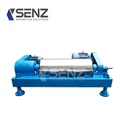
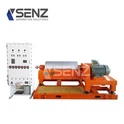
The centrifuge consists of a rotating bowl and a screw conveyor inside the bowl. The slurry is fed into the centrifuge, and the high - speed rotation of the bowl creates a centrifugal force that causes the solid particles to settle on the inner wall of the bowl. The screw conveyor, which rotates at a slightly different speed than the bowl, then transports the settled solids towards the discharge end of the centrifuge, while the clarified liquid is discharged from the other end.
The Concept of Differential Speed
The differential speed refers to the difference in rotational speed between the screw conveyor and the bowl. It is a crucial parameter that can significantly affect the performance of the coal tar decanter centrifuge.
Impact on Separation Efficiency
The differential speed plays a vital role in determining the separation efficiency of the centrifuge. A lower differential speed allows more time for the solid particles to settle on the bowl wall. This is because the slower movement of the screw conveyor gives the particles more opportunity to be captured by the centrifugal force and form a compacted layer on the bowl. As a result, the separation between the solid and liquid phases is more effective, leading to a higher - quality clarified liquid and a drier solid cake.
On the other hand, if the differential speed is too high, the screw conveyor moves the settled solids too quickly towards the discharge end. This can cause some of the solid particles to be re - entrained into the liquid phase, reducing the separation efficiency. In addition, a high differential speed may not allow enough time for the liquid to drain from the solid cake, resulting in a wetter solid discharge.
Influence on Solids Discharge
The differential speed also has a direct impact on the solids discharge from the centrifuge. A proper differential speed ensures a smooth and continuous discharge of the solid cake. When the differential speed is set correctly, the screw conveyor can effectively push the settled solids out of the centrifuge without causing blockages or excessive wear on the equipment.
If the differential speed is too low, the solids may accumulate in the centrifuge, leading to clogging and reduced throughput. Conversely, if the differential speed is too high, the solid cake may be discharged too rapidly, resulting in a less - compacted and more fragmented cake. This can cause problems in downstream processing, such as difficulties in handling and storage.
Optimizing Differential Speed for Coal Tar Separation
To achieve the best performance in coal tar separation, it is essential to optimize the differential speed. This requires a careful balance between separation efficiency and solids discharge.
One approach is to start with a relatively low differential speed and gradually increase it while monitoring the quality of the separated products. By observing the clarity of the clarified liquid and the dryness of the solid cake, adjustments can be made to find the optimal differential speed for a particular coal tar feed.
In addition, factors such as the characteristics of the coal tar (e.g., particle size distribution, viscosity) and the desired throughput also need to be considered when setting the differential speed. For example, if the coal tar has a high concentration of fine particles, a lower differential speed may be required to ensure efficient separation.
Our Range of Centrifuges
At our company, we offer a variety of decanter centrifuges suitable for coal tar separation. Our Drycake DR Decanter Centrifuge is designed to provide high - efficiency separation and reliable solids discharge. It is equipped with advanced control systems that allow for precise adjustment of the differential speed, ensuring optimal performance for different coal tar applications.
We also have the Soya Milk Decanter Centrifuge, which, although primarily designed for soya milk separation, shares some of the same principles as the coal tar decanter centrifuge. The technology used in this centrifuge can also provide insights into the design and operation of coal tar centrifuges.
Another product in our portfolio is the Gluten Wheat Flour Separator. While not directly related to coal tar separation, it demonstrates our expertise in centrifuge technology and our ability to develop customized solutions for different separation needs.
Conclusion
In conclusion, the differential speed is a critical factor in the operation of a coal tar decanter centrifuge. It affects both the separation efficiency and the solids discharge, and optimizing it is essential for achieving high - quality separation results. As a supplier of coal tar decanter centrifuges, we understand the importance of this parameter and are committed to providing our customers with centrifuges that offer precise control of the differential speed.
If you are looking for a reliable coal tar decanter centrifuge or have any questions about differential speed and its impact on centrifuge performance, we invite you to contact us for a consultation. Our team of experts is ready to assist you in finding the best solution for your coal tar separation needs.
References
- "Centrifuge Technology Handbook", [Publisher's Name], [Year of Publication]
- "Separation Processes in Chemical Engineering", [Author's Name], [Publisher's Name], [Year of Publication]