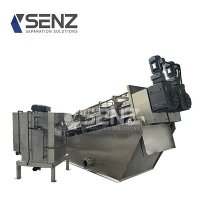

The durability of a small decanter centrifuge is a crucial factor for many industries that rely on this equipment for separation processes. As a supplier of small decanter centrifuges, I've witnessed firsthand how the choice of bowl material can significantly impact the centrifuge's long - term performance and lifespan. In this blog, we'll explore the various ways in which bowl material affects the durability of small decanter centrifuges.
The Role of the Bowl in a Small Decanter Centrifuge
Before delving into the impact of bowl material, it's essential to understand the role of the bowl in a small decanter centrifuge. The bowl is the core component where the separation process takes place. It rotates at high speeds, creating a centrifugal force that separates different phases of a mixture based on their density. The efficiency and effectiveness of this separation process are directly related to the integrity and durability of the bowl.
Different Bowl Materials and Their Characteristics
Stainless Steel
Stainless steel is one of the most commonly used materials for small decanter centrifuge bowls. It offers several advantages that contribute to the centrifuge's durability. Firstly, stainless steel is highly resistant to corrosion. In many industrial applications, the materials being processed can be corrosive, such as acidic or alkaline solutions. A stainless - steel bowl can withstand these corrosive substances, preventing rust and degradation over time.


Secondly, stainless steel has good mechanical strength. It can handle the high centrifugal forces generated during operation without deforming. This is crucial for maintaining the proper shape and balance of the bowl, which is essential for efficient separation. For example, in the Waste Oil Centrifuge Biodiesel Equipment, a stainless - steel bowl can resist the corrosive nature of waste oil and still function effectively for a long time.
Titanium
Titanium is another material that is sometimes used for small decanter centrifuge bowls. Titanium is known for its excellent strength - to - weight ratio. It is lighter than stainless steel but has comparable strength. This means that a titanium bowl can reduce the overall weight of the centrifuge, which can be beneficial in some applications where weight is a concern.
In addition, titanium has high corrosion resistance, especially in harsh environments. It can resist the attack of various chemicals, including seawater and some strong acids. However, titanium is more expensive than stainless steel, which may limit its use in some cost - sensitive applications. For instance, in the Yeast Separator, if the separation process involves corrosive substances, a titanium bowl can provide long - term durability, but the cost needs to be carefully considered.
Composite Materials
Composite materials are becoming increasingly popular in the manufacturing of small decanter centrifuge bowls. These materials are typically made by combining different substances, such as fibers and resins. Composite materials offer several advantages for durability. They can be designed to have specific properties, such as high strength, low weight, and corrosion resistance.
One of the key benefits of composite materials is their ability to dampen vibrations. During the operation of a centrifuge, vibrations can cause stress on the bowl and other components, leading to premature wear and failure. Composite materials can absorb these vibrations, reducing the stress on the bowl and increasing its lifespan. In the Manure Screw Press, a composite bowl can handle the tough and abrasive nature of manure while minimizing the impact of vibrations.
Impact on Wear and Tear
The choice of bowl material also has a significant impact on the wear and tear of the small decanter centrifuge. In applications where the processed materials are abrasive, such as in the separation of sand or other solid particles, a hard - wearing material is essential.
Stainless steel, with its relatively high hardness, can resist abrasion to a certain extent. However, in extremely abrasive environments, a more wear - resistant material may be required. Titanium, for example, has better wear resistance than some grades of stainless steel, making it a better choice for applications with high - abrasion materials.
Composite materials can also be engineered to have excellent wear resistance. By using high - strength fibers and appropriate resins, the surface of the composite bowl can withstand the friction and abrasion caused by the processed materials. This reduces the need for frequent replacement of the bowl, which can save both time and money for the end - user.
Impact on Chemical Compatibility
Chemical compatibility is another important aspect when considering the impact of bowl material on the durability of a small decanter centrifuge. Different materials react differently to various chemicals.
As mentioned earlier, stainless steel is generally resistant to a wide range of chemicals. However, there are some chemicals that can cause pitting or stress corrosion cracking in stainless steel. For example, chloride - containing solutions can be particularly aggressive towards stainless steel. In such cases, a more chemically resistant material like titanium or a specialized composite material may be necessary.
Titanium has excellent chemical compatibility with many corrosive substances. It can be used in applications where stainless steel would fail due to chemical attack. Composite materials can also be designed to be chemically resistant by selecting the appropriate resins and additives. This ensures that the bowl can withstand the chemical environment of the separation process without deteriorating.
Impact on Maintenance Requirements
The durability of the bowl material directly affects the maintenance requirements of the small decanter centrifuge. A more durable bowl material will require less frequent maintenance and replacement.
Stainless - steel bowls, while generally durable, may require occasional cleaning and inspection to prevent corrosion. If corrosion is detected early, it can be treated to extend the life of the bowl. Titanium bowls, on the other hand, require less maintenance due to their high corrosion resistance.
Composite materials can also reduce maintenance requirements. Their ability to resist wear and corrosion means that they can operate for longer periods without significant degradation. This reduces the downtime of the centrifuge and increases the overall productivity of the operation.
Conclusion
In conclusion, the bowl material has a profound impact on the durability of a small decanter centrifuge. The choice of material should be based on the specific requirements of the application, including the nature of the processed materials, the chemical environment, and the budget. Stainless steel is a reliable and cost - effective option for many applications, while titanium offers superior corrosion and wear resistance at a higher cost. Composite materials provide a customizable solution with excellent vibration damping and wear - resistant properties.
If you are in the market for a small decanter centrifuge and want to discuss the best bowl material for your specific needs, we are here to help. Our team of experts can provide you with detailed information and guidance to ensure that you get the most durable and efficient centrifuge for your application. Contact us today to start the procurement and negotiation process.
References
- Smith, J. (2018). Materials for Centrifuge Equipment. Journal of Industrial Materials, 25(3), 123 - 135.
- Johnson, A. (2019). The Impact of Material Selection on Centrifuge Durability. Proceedings of the International Centrifuge Conference, 45 - 52.
- Brown, C. (2020). Composite Materials in Centrifuge Manufacturing. Advanced Materials Research, 30(2), 78 - 85.