
What is the impact of oil droplets size on the separation efficiency of an oil water separator?
In the industrial and environmental sectors, oil water separators play a crucial role in separating oil from water, which is essential for various applications such as wastewater treatment, oil recovery, and environmental protection. As a leading supplier of oil water separators, we have witnessed the significance of understanding the factors that affect the separation efficiency. One such critical factor is the size of oil droplets.
The Basics of Oil Water Separation
Before delving into the impact of oil droplet size, it is important to understand the basic principles of oil water separation. Oil and water are immiscible liquids with different densities. The separation process relies on these density differences, where oil, being less dense than water, tends to float on the water surface. However, in real - world scenarios, oil often exists in the form of droplets dispersed in water, especially in emulsion systems.
Oil water separators use various mechanisms to separate these droplets from water, including gravity separation, coalescence, centrifugal force, and filtration. Each method has its own advantages and limitations, and the effectiveness of these methods is highly dependent on the size of the oil droplets.
Influence of Oil Droplet Size on Gravity Separation
Gravity separation is one of the simplest and most commonly used methods in oil water separators. According to Stokes' law, the settling velocity of a spherical particle (in this case, an oil droplet) in a fluid is proportional to the square of its radius. Larger oil droplets have a higher settling velocity and can be more easily separated from water by gravity.


For example, in a typical gravity - based oil water separator, large oil droplets (e.g., greater than 100 microns) will quickly rise to the surface of the water and can be skimmed off relatively easily. However, smaller oil droplets (e.g., less than 20 microns) have a much lower settling velocity and may remain suspended in the water for a long time. This means that the separation efficiency of gravity - based separators decreases significantly as the oil droplet size decreases.
In industrial applications, if the influent contains a large number of small oil droplets, the gravity separator may not be able to achieve the desired separation efficiency, resulting in higher oil content in the effluent and potential environmental pollution.
Impact on Coalescence - Based Separation
Coalescence is a process where small oil droplets collide and combine to form larger droplets, which can then be more easily separated from water. The probability of coalescence depends on several factors, including the oil droplet size.
Smaller oil droplets have a larger surface - to - volume ratio, which means they are more dispersed in the water and have a higher chance of interacting with each other. However, they also have a lower inertia, which makes it more difficult for them to overcome the electrostatic repulsion between droplets and collide effectively.
In a coalescence - based oil water separator, the separator media is designed to promote the collision and coalescence of oil droplets. For small oil droplets, a well - designed coalescer can increase the probability of coalescence by providing a large surface area for droplet contact. Once the droplets coalesce into larger ones, they can be separated more easily by gravity or other means.
However, if the initial oil droplet size is extremely small, the coalescence process may be less efficient. In such cases, additional pre - treatment steps, such as chemical demulsification, may be required to increase the droplet size and improve the overall separation efficiency.
Effect on Centrifugal Separation
Centrifugal separators use centrifugal force to separate oil from water. The centrifugal force acting on an oil droplet is proportional to its mass, which is related to its volume. Larger oil droplets experience a greater centrifugal force and are more likely to be separated from water.
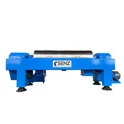
In a Centrifuge Oil Separator, the high - speed rotation of the centrifuge creates a strong centrifugal field. Oil droplets are forced towards the center of the centrifuge, while water is forced towards the outer wall. The separation efficiency of a centrifugal separator is highly dependent on the oil droplet size.
Smaller oil droplets require a higher centrifugal force or a longer residence time in the centrifuge to be effectively separated. If the oil droplet size is too small, the centrifugal force may not be sufficient to overcome the drag force exerted by the water, and the droplets may remain in the water phase.
Role of Oil Droplet Size in Filtration
Filtration is another method used in oil water separators. Filters can trap oil droplets based on their size. The pore size of the filter is a critical parameter that determines which oil droplets can be removed.
Larger oil droplets are more easily trapped by the filter media because they are larger than the pores. However, if the oil droplets are too small, they may pass through the filter without being captured. In some cases, a series of filters with different pore sizes may be used to achieve a higher separation efficiency.
For very small oil droplets, ultra - fine filters may be required. However, these filters can be easily clogged, which reduces the flow rate and requires frequent replacement or cleaning. Therefore, understanding the oil droplet size distribution is essential for selecting the appropriate filter media and designing an effective filtration system.
Practical Considerations for Oil Water Separator Design and Operation
As an oil water separator supplier, we take the oil droplet size into account when designing and selecting the appropriate separator for our customers. We conduct a detailed analysis of the influent oil droplet size distribution to determine the most suitable separation method or a combination of methods.
For applications where the oil droplet size is relatively large, gravity separators may be sufficient. However, if the oil droplets are small, we may recommend a combination of coalescence, centrifugation, and filtration to improve the separation efficiency.
In addition, we also provide pre - treatment options to increase the oil droplet size. Chemical demulsifiers can be used to break the emulsion and promote the coalescence of small oil droplets. This pre - treatment step can significantly improve the performance of the downstream oil water separator.
Impact on the Environment and Industrial Processes
The separation efficiency of oil water separators has a direct impact on the environment and industrial processes. Inefficient separation can lead to the discharge of oil - contaminated water into the environment, which can cause water pollution, harm aquatic life, and damage ecosystems.
In industrial processes, the presence of oil in water can also cause problems such as corrosion of equipment, fouling of pipes, and reduced efficiency of downstream processes. By understanding and controlling the oil droplet size, we can improve the separation efficiency of oil water separators, reduce environmental pollution, and enhance the performance of industrial processes.
Conclusion
The size of oil droplets has a significant impact on the separation efficiency of oil water separators. Different separation methods, including gravity separation, coalescence, centrifugation, and filtration, are affected by the oil droplet size in different ways. As an oil water separator supplier, we understand the importance of considering oil droplet size in the design and operation of our separators.
If you are facing challenges in oil water separation or are looking for a reliable oil water separator, we are here to help. Our team of experts can analyze your specific needs, including the oil droplet size distribution, and recommend the most suitable separator solution for your application. Whether you need a Palm Oil Clarifier Decanter Centrifuge for palm oil processing or a Manure Screw Press for agricultural wastewater treatment, we have the expertise and products to meet your requirements. Contact us today to start a procurement discussion and find the best solution for your oil water separation needs.
References
- Fitch, B. J. (2018). Oil - Water Separation Technology. Elsevier.
- Wakeman, R. J., & Tarleton, E. S. (2005). Solid/Liquid Separation Equipment Scale - up. Elsevier.
- Schramm, L. L. (Ed.). (2000). Emulsions, Foams, and Suspensions: Fundamentals and Applications. CRC Press.