


Yo, folks! I'm a supplier of Soymilk Decanter Centrifuge. Today, I wanna chat about how the material of the bowl in a soymilk decanter centrifuge affects its corrosion resistance.
First off, let's understand what a soymilk decanter centrifuge is. It's a machine that separates different components in soymilk, like solids and liquids. The bowl is a key part of this centrifuge. It spins at high speeds, and it's constantly in contact with the soymilk and other substances. So, corrosion resistance is super important.
Now, let's talk about different materials used for the bowl and how they stack up in terms of corrosion resistance.

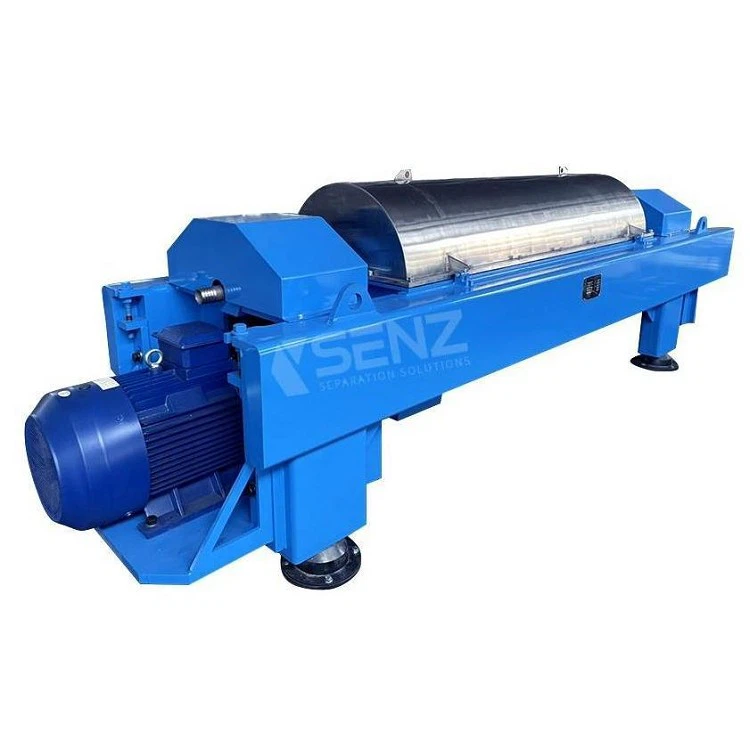
Stainless Steel
Stainless steel is one of the most common materials for the bowl in soymilk decanter centrifuges. It's got a lot going for it. For starters, it's relatively affordable. You don't have to break the bank to get a centrifuge with a stainless - steel bowl.
Stainless steel has a natural oxide layer on its surface. This layer acts as a shield, protecting the metal underneath from corrosion. When it comes to soymilk, which has a slightly acidic pH due to the presence of proteins and other organic compounds, stainless steel can hold up well.
However, not all stainless steels are created equal. There are different grades, like 304 and 316. Grade 304 is a general - purpose stainless steel. It's good for most soymilk applications, but it might not be the best if the soymilk has a higher concentration of corrosive substances, like salts or acids.
On the other hand, grade 316 stainless steel is more corrosion - resistant. It contains molybdenum, which enhances its ability to withstand corrosion in more aggressive environments. If your soymilk production process involves adding certain additives or if you're dealing with water that has a higher mineral content, 316 stainless steel would be a better choice.
Titanium
Titanium is another material that can be used for the bowl of a soymilk decanter centrifuge. It's known for its excellent corrosion resistance. Titanium forms a very stable oxide layer on its surface, which is extremely resistant to a wide range of chemicals.
In the context of soymilk, titanium can handle any kind of acidic or alkaline conditions that might occur during the production process. It's also very strong and lightweight. This means that the centrifuge can spin at higher speeds without putting too much stress on the machine's motor and other components.
But there's a catch. Titanium is expensive. Using a titanium bowl in a soymilk decanter centrifuge will significantly increase the cost of the machine. So, it's usually only used in high - end applications or when the soymilk production process is very demanding in terms of corrosion resistance.
Plastic
Plastic materials are also used in some soymilk decanter centrifuges. There are different types of plastics, like polyethylene and polypropylene. These plastics are cheap and lightweight.
They are resistant to many common chemicals found in soymilk. For example, they can withstand the mild acids and alkalis present in the soymilk without corroding. However, plastics have some limitations.
They are not as strong as metals like stainless steel or titanium. They can deform under high - speed rotation and high temperatures. Also, they might not be suitable for long - term use in a harsh chemical environment. Over time, the plastic can break down, and small particles of plastic might end up in the soymilk, which is obviously a big no - no in the food industry.
Composite Materials
Composite materials are a combination of different substances. They can be designed to have specific properties, including good corrosion resistance. For example, a composite material might consist of a plastic matrix reinforced with fibers.
The plastic part can provide some corrosion resistance, while the fibers can add strength. In a soymilk decanter centrifuge, composite materials can be a good compromise between cost and performance. They can offer better corrosion resistance than some plastics while being more affordable than titanium.
However, the manufacturing process of composite materials can be complex. Quality control is also crucial. If the composite material is not made correctly, it might delaminate or have other structural issues over time, which can affect its corrosion resistance and overall performance.
Factors Affecting Corrosion in the Bowl
It's not just the material of the bowl that affects its corrosion resistance. There are other factors too.
The pH of the soymilk is a big one. As I mentioned earlier, soymilk is slightly acidic, but if the pH changes due to additives or improper storage, it can increase the corrosion rate. For example, if a lot of acidic preservatives are added to the soymilk, it can be more corrosive to the bowl.
The temperature also plays a role. Higher temperatures can speed up the chemical reactions that cause corrosion. If the soymilk is processed at high temperatures, the bowl needs to be made of a material that can withstand these conditions.
The presence of impurities in the soymilk, like salt, minerals, or other contaminants, can also increase corrosion. These impurities can react with the material of the bowl and break down the protective layers on its surface.
Why Corrosion Resistance Matters
Corrosion in the bowl of a soymilk decanter centrifuge can lead to a bunch of problems. First of all, it can contaminate the soymilk. If the metal or other material of the bowl starts to corrode, small particles can get into the soymilk, which can affect its quality and safety.
It can also reduce the efficiency of the centrifuge. As the bowl corrodes, its surface can become rough, which can disrupt the smooth flow of the soymilk during the separation process. This can lead to less effective separation of solids and liquids.
In the long run, corrosion can damage the bowl beyond repair. This means you'll have to replace the bowl, which can be expensive and time - consuming. It can also cause downtime in your soymilk production, which can cost you a lot of money.
Conclusion
So, as you can see, the material of the bowl in a soymilk decanter centrifuge has a huge impact on its corrosion resistance. When choosing a centrifuge, you need to consider the specific requirements of your soymilk production process.
If you're on a tight budget and your soymilk has a relatively low corrosion potential, stainless steel 304 might be a good option. But if you need better corrosion resistance, 316 stainless steel, titanium, or composite materials could be considered.
At our company, we offer Soymilk Decanter Centrifuges with different bowl materials to meet your needs. We also have Fish Oil Decanter Centrifuges and Black Diesel Oil Centrifuges for other applications.
If you're interested in our products or have any questions about corrosion resistance and the materials of the centrifuge bowls, feel free to reach out to us for a chat and start a procurement discussion. We're here to help you find the best solution for your business.
References
- "Corrosion Resistance of Metals in Food Processing Environments" - A research paper on the general corrosion behavior of metals in food - related applications.
- "Materials Science for Centrifuge Design" - A textbook that covers the basics of materials selection for centrifuge components.
- "Plastic Materials in Industrial Applications" - An article discussing the properties and limitations of plastics in industrial machinery.


