
As a trusted supplier of oil water separators, I've witnessed firsthand the critical role that flow patterns play in determining the performance of these essential devices. In the industrial and environmental sectors, oil water separators are indispensable for effectively separating oil from water, ensuring environmental compliance, and optimizing resource utilization. Understanding how flow patterns impact the separator's performance is key to making informed decisions and achieving the best results.


Theoretical Considerations of Flow Patterns
To comprehend the influence of flow patterns on oil water separator performance, it's vital to first understand the basic fluid dynamics involved. There are primarily two types of flow: laminar and turbulent. Laminar flow is characterized by smooth, parallel layers of fluid moving in an orderly manner. In contrast, turbulent flow is chaotic, with fluid particles moving in irregular paths and directions.
In an oil water separator, the ideal flow pattern is often laminar. This is because laminar flow allows for better separation of oil and water based on their different densities. When the flow is laminar, the oil droplets have a higher chance of rising to the surface while the heavier water settles at the bottom. According to Stokes' law, the rising velocity of an oil droplet in a fluid is directly proportional to the square of its diameter and the difference in density between the oil and water, and inversely proportional to the viscosity of the fluid. In a laminar flow environment, the conditions are more stable, and the oil droplets can more easily follow this physical principle to separate from the water.
On the other hand, turbulent flow can disrupt the separation process. The chaotic movement of fluid can break up larger oil droplets into smaller ones, reducing their rising velocity and making it more difficult for them to separate from the water. Turbulence can also cause the re - mixing of separated oil and water, leading to a decrease in the separation efficiency of the oil water separator.
Impact of Flow Patterns on Different Types of Oil Water Separators
Gravity Separators
Gravity separators are one of the most common types of oil water separators. They rely on the difference in density between oil and water to achieve separation. In a well - designed gravity separator, a laminar flow pattern is crucial. When the influent flow is laminar, the oil droplets have enough time to rise to the surface and accumulate in the oil collection chamber.
However, if the flow rate is too high or there are sudden changes in the flow direction, turbulent flow can occur. This can prevent the oil droplets from rising effectively, resulting in oil carry - over in the effluent water. For example, in a large - scale industrial wastewater treatment plant using a gravity separator, improper inlet design can cause high - velocity jets of water to enter the separator, creating turbulent zones and reducing the overall separation efficiency.
Coalescing Separators
Coalescing separators use special media to promote the coalescence of small oil droplets into larger ones, which can then be more easily separated from the water. The flow pattern in a coalescing separator also has a significant impact on its performance.
A laminar flow allows the oil droplets to come into contact with the coalescing media in a more controlled manner. As the oil droplets adhere to the media surface, they gradually merge with other droplets, forming larger and more buoyant droplets. Turbulent flow, on the other hand, can prevent the proper interaction between the oil droplets and the coalescing media. It can also cause the detached oil droplets from the media to be re - dispersed in the water, leading to a lower separation efficiency.
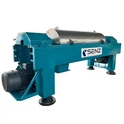
Centrifuge Oil Separator
Centrifuge oil separators use centrifugal force to separate oil and water. The flow pattern inside the centrifuge is complex and is influenced by factors such as the rotational speed, the geometry of the centrifuge, and the inlet flow conditions.
In a well - functioning centrifuge, the flow should be optimized to ensure that the oil and water are effectively separated under the action of centrifugal force. A stable flow pattern helps to maintain the separation zones within the centrifuge. Turbulent flow can disrupt these zones, causing the re - mixing of separated oil and water and reducing the purity of the separated products.
Practical Implications of Flow Pattern Management
In real - world applications, managing the flow pattern is crucial for maximizing the performance of oil water separators. Here are some practical considerations:
Inlet Design
The design of the inlet is a key factor in controlling the flow pattern. A well - designed inlet can distribute the influent evenly across the separator, reducing the chances of turbulent flow. For example, using flow diffusers or baffles at the inlet can help to slow down the flow and make it more laminar.
Flow Rate Control
Maintaining an appropriate flow rate is essential. A flow rate that is too high can lead to turbulent flow, while a flow rate that is too low may result in inefficient use of the separator's capacity. By monitoring and adjusting the flow rate, operators can ensure that the separator operates under optimal conditions.
Maintenance and Monitoring
Regular maintenance of the separator is necessary to ensure that the flow pattern remains stable. This includes checking for blockages in the inlet or outlet pipes, as well as inspecting the internal components of the separator. Monitoring the performance of the separator through parameters such as oil content in the effluent water can also help to detect any changes in the flow pattern and take corrective actions in a timely manner.
The Role of Advanced Technologies
In recent years, advanced technologies have been developed to better control the flow pattern in oil water separators. For example, computational fluid dynamics (CFD) simulations can be used to predict the flow behavior inside the separator and optimize its design. By creating virtual models of the separator, engineers can analyze different flow scenarios and make adjustments to the design to improve the separation efficiency.
Another emerging technology is the use of smart sensors to monitor the flow pattern in real - time. These sensors can detect changes in the flow velocity and turbulence levels, allowing operators to take immediate action to maintain the optimal flow conditions.
Case Studies
Let's look at a few real - world case studies to illustrate the impact of flow patterns on oil water separator performance.
In an automotive manufacturing plant, the company was using a gravity separator to treat its oily wastewater. Initially, they experienced high levels of oil in the effluent water. After a detailed analysis, it was found that the inlet design was causing turbulent flow. By installing a flow diffuser at the inlet, the flow pattern was changed from turbulent to laminar. As a result, the oil content in the effluent water was significantly reduced, and the separator's performance improved.
In a refinery, a Decantador was used for oil - water separation. Due to a sudden increase in the flow rate during a production peak, turbulent flow occurred inside the decantador. This led to a decrease in the separation efficiency and an increase in the oil content in the water phase. After adjusting the flow rate and making some minor modifications to the internal baffles, the flow pattern was stabilized, and the separation performance was restored.
Conclusion
In conclusion, the flow pattern has a profound impact on the performance of oil water separators. By understanding the basic principles of fluid dynamics and the specific requirements of different types of separators, operators can take steps to optimize the flow pattern and improve the separation efficiency.
As an Oil Water Separator supplier, we are committed to providing high - quality products and professional solutions to help our customers achieve the best results. Our Solids Control Centrifuge, Decantador, and Centrifuge Oil Separator are designed with advanced technology to ensure stable flow patterns and excellent separation performance.
If you are looking for a reliable oil water separator solution or need more information about optimizing flow patterns for your specific application, please feel free to contact us. We are here to help you make the right choice and achieve your separation goals.
References
- Foust, A. S., Wenzel, L. A., Clump, C. W., Maus, L., & Andersen, L. B. (1980). Principles of Unit Operations. John Wiley & Sons.
- McCabe, W. L., Smith, J. C., & Harriott, P. (2005). Unit Operations of Chemical Engineering. McGraw - Hill.
- Perry, R. H., & Green, D. W. (2007). Perry's Chemical Engineers' Handbook. McGraw - Hill.