




Jinhua Shenzhou Centrifuge Co., Ltd. is one of the leading manufacturers and suppliers of centrifugal device for blood separation in China. Please feel free to wholesale customized centrifugal device for blood separation at competitive price from our factory. For more cheap products, contact us now.
Its working principle is as follows:

Feed
The material to be separated is introduced into the centrifuge drum through a feed pipe. The feed pipe is usually located at the center of the drum, enabling the material to be evenly distributed when entering the drum.
Generation of Centrifugal Force by Rotation
The drum rotates at a high speed around its axis, generating a strong centrifugal force. The magnitude of the centrifugal force is directly proportional to the rotational speed of the drum, the mass of the material, and the distance of the material from the axis of rotation. Under high - speed rotation, different components in the material, due to density differences, will be subjected to different magnitudes of centrifugal force.
Component Separation
Solid - Liquid Separation: If the material is a solid - liquid mixture, the solid particles with higher density will be subjected to a greater centrifugal force and thus be thrown towards the inner wall of the drum. The liquid with a lower density will gather in the central region of the drum. As the separation process progresses, the solid particles will gradually accumulate on the inner wall of the drum to form a sediment layer, while the liquid forms an annular liquid layer in the central region.
Liquid - Liquid Separation: When the material consists of two immiscible liquids with different densities, the liquid with a higher density will move towards the outer side of the drum under the action of centrifugal force, and the liquid with a lower density will move towards the inner side of the drum. The two liquids form two different annular liquid layers in the drum, achieving separation.

Discharge
Solid Discharge: During the solid - liquid separation process, the solid particles accumulated on the inner wall of the drum can be removed from the drum either by periodically stopping the machine for cleaning or through continuous slag - discharging. Tubular centrifuges with continuous slag - discharging usually have a slag - discharging port at one end of the drum, and the solid particles are discharged from the drum through the slag - discharging port under the action of centrifugal force.
Liquid Discharge: The separated liquids are discharged through different outlets at the bottom of the drum. For liquid - liquid separation, the two liquid layers with different densities will flow out of the drum through their respective corresponding outlets. For solid - liquid separation, the liquid flows out of the drum through the liquid outlet at the bottom of the drum.
Tubular Centrifuge Parameters
|
Item Type |
GQ75 |
GF75 |
GQ105 |
GFX105 |
GFX150 |
GQ150 |
GF150 |
|
|
Bowl |
Inner diameters(mm) |
75 |
75 |
105 |
105 |
142 |
142 |
142 |
|
Effective height(mm) |
450 |
450 |
730 |
730 |
730 |
730 |
730 |
|
|
Settling volume (L) |
2.67 |
2.67 |
6 |
6 |
10 |
10 |
10 |
|
|
Speed(r/min) |
20000 |
20000 |
19000 |
19000 |
15000 |
15000 |
15000 |
|
|
Max Separation factors |
17800 |
17800 |
21000 |
21000 |
18000 |
18000 |
18000 |
|
|
Nozzle diameters of fddeing inletmm |
3, 5, 7 |
3, 5, 7 |
4, 6, 8 |
4, 6, 8 |
6, 8, 10 |
6, 8, 10 |
6, 8, 10 |
|
|
Pressure of feeding inlet(Mpa) |
>0.05Mpa |
>0.05Mpa |
>0.05Mpa |
>0.05Mpa |
>0.05Mpa |
>0.05Mpa |
>0.05Mpa |
|
|
Production capacity (kg/h) |
~670 |
~670 |
~1600 |
-1400 |
-3200 |
~3200 |
~3200 |
|
|
Motor power(KW) |
1.5 |
1.5 |
2.0 |
3.0 |
3.0 |
3.0 |
3.0 |
|
|
Outline dimensions(mm) |
500*700*1300 |
500*700*1300 |
600*1000*1600 |
600*1000*1600 |
600*1000*1600 |
600*1000*1600 |
600*1000*1600 |
|
|
Machine weight(kg) |
300 |
300 |
450 |
460 |
590 |
580 |
590 |
|
|
Cooler area(m2) |
0.38 |
0.38 |
1.4 |
1.4 |
1.4 |
1.4 |
1.4 |
|
|
Bearing Pressure(Mpa) |
0.5 |
0.5 |
0.5 |
0.5 |
0.5 |
0.5 |
0.5 |
|
Applications of Tubular Bowl Centrifuges
Tubular centrifuges have a wide range of applications in the industrial sector, covering numerous different industries. Here are some typical application scenarios:
Liquid Purification: In the operation of liquid purification, tubular centrifuges play a crucial role. By separating solid particles from the liquid medium, they achieve the purpose of liquid clarification. In the food and beverage manufacturing industry, this technology is widely used to remove impurities from fruit juices, wines, and beers, thereby improving the quality and purity of products.
Liquid - Liquid Separation: Tubular centrifuges can effectively separate two liquids with different densities. For example, in the oil and gas industry, it is often used for the separation of oil and water, and can also be used to classify different types of oils, playing an indispensable role in the resource refining and processing process.
Solid Extraction Process: In industries such as pharmaceuticals, chemicals, and dye production, there is often a need to extract solid components from liquids. Tubular centrifuges can accurately complete this task with their high - efficiency separation performance, providing key support for the production of subsequent products.
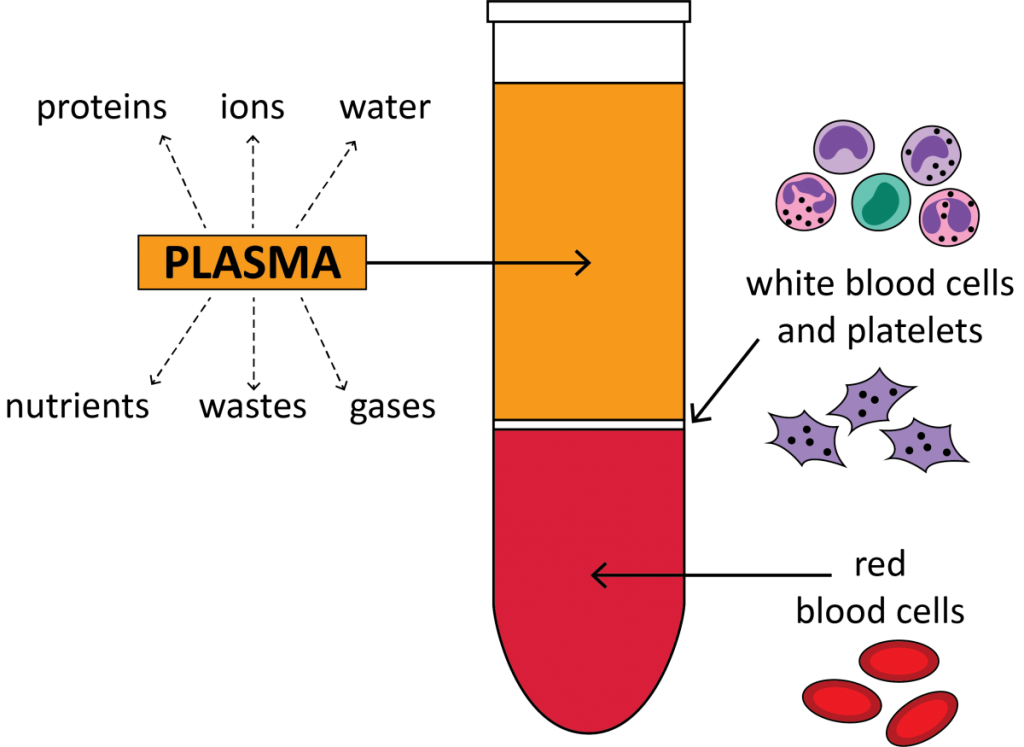
Medical Blood Component Separation: In the medical field, tubular centrifuges are important equipment for separating blood components. They can effectively separate different components in the blood, such as red blood cells, white blood cells, and plasma, providing necessary conditions for clinical diagnosis, treatment, and the preparation of blood products.

Advantages of Tubular Centrifuges
Compared with other separation techniques, tubular centrifuges exhibit many outstanding advantages:
Excellent Separation Efficiency: Tubular centrifuges have remarkable separation capabilities. They can efficiently handle the separation of small particles and also achieve significant separation effects for liquids with different densities, performing outstandingly in scenarios where high separation precision is required.
Continuous Operation Mode: This equipment can operate continuously, making it especially suitable for application scenarios that require large - scale material processing. It greatly improves production efficiency and reduces production time costs.
Low Maintenance Requirement Feature: Tubular centrifuges have a relatively simple design structure. In daily use, there is almost no need for complex maintenance work. This not only reduces the equipment's maintenance costs but also makes the equipment operate more stably and reliably.
Compact Design Style: With a compact design, it occupies less space. This makes it more convenient to install in existing production facilities. There is no need for large - scale site renovation, reducing the difficulty and cost of equipment installation.
Disadvantages of Tubular Centrifuges
Despite having many advantages, tubular centrifuges also have some non - negligible limitations in practical applications:
High Initial Purchase Cost: The initial purchase price of tubular centrifuges is relatively high. For some small - scale enterprises with tight funds or start - ups that have just started, this may pose a certain economic pressure, restricting the procurement and application of the equipment.
Limited Application Flexibility: These types of centrifuges are usually designed for specific application scenarios and separation tasks. When facing different types of separation process requirements, it is difficult to make flexible adjustments and adaptations, which limits its application scope to a certain extent.
.
Working Characteristics of GF - type Centrifuge
During the operation of the GF - type tubular centrifuge, the liquid phase with a higher density forms an outer - layer circulation flow in the drum, while the liquid phase with a lower density forms an inner - layer circulation flow. Subsequently, they flow to the upper part of the drum and are discharged through their respective liquid outlets. A small amount of solid generated during the operation is deposited on the inner wall of the drum and is manually cleaned and discharged after the equipment stops running..
Working Characteristics of GQ - type Centrifuge
For the GQ - type tubular centrifuge, fine solid - phase particles with a higher density gradually precipitate and accumulate on the inner wall of the drum, forming a residue layer over time. Similarly, after the equipment stops running, manual cleaning and discharge of the residues deposited on the inner wall of the drum are required to ensure the normal operation of the equipment and subsequent separation effec
Hot Tags: centrifugal device for blood separation, China centrifugal device for blood separation manufacturers, suppliers, factory, destructive distillation coal, dewater centrifuge, Celery juice separation, abrasion decanter centrifuge, oil and water separator, Waste Oil Treatment Horizontal Screw Centrifuge


